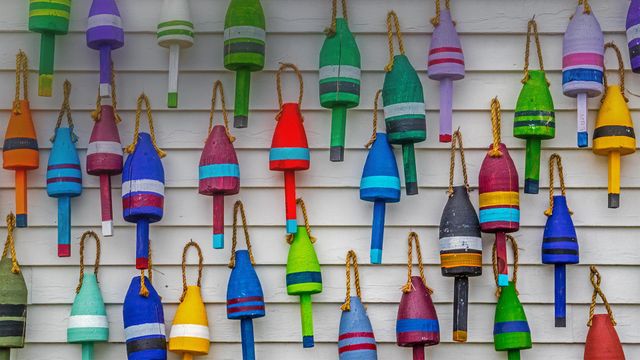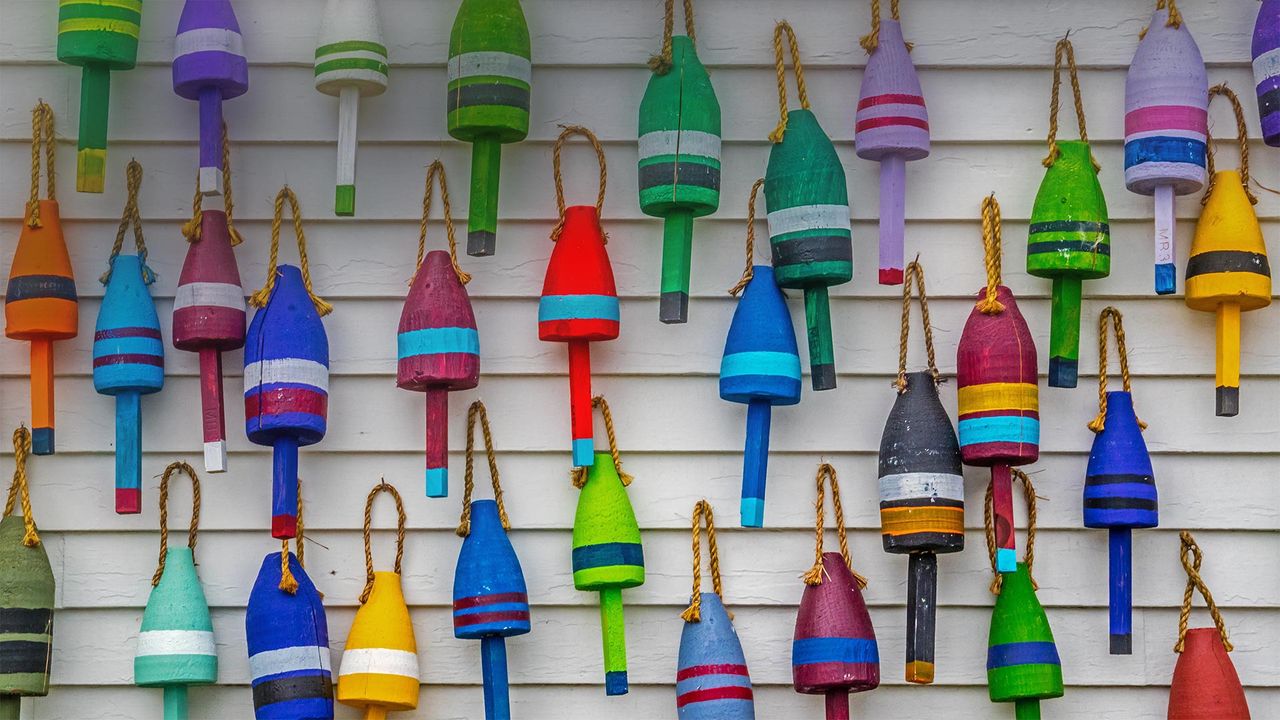
Multicoloured lobster buoys, Acadia National Park, Maine, USA
© Cheri Alguire/Shutterstoc
Lobster tales
It’s peak lobster season in Maine, USA, and colourful wooden buoys like these are marking lobster traps (or 'pots') along the state’s coastline. Each fisherman or woman has a unique colour and pattern to their buoys, and designs are frequently passed down through generations. While practical, lobster buoys hanging from the sides of barns and sheds are also an iconic site along coastal Maine.
The state of Maine is known as Vacationland for a reason—it has a year-round population of just 1.3 million people, but it welcomes more than 10 million visitors in a typical summer. And for most, a visit to Maine isn't complete without a taste of broiled lobster tails, lobster bisque, or lobster rolls. The sweet lobster meat (dipped in butter, of course) wasn’t always so revered. Lobster were once considered trash fish; they were so abundant they'd wash up on beaches, were fed to prisoners, and were used as fish bait and fertiliser. Americans’ feelings toward lobster changed in the mid-19th century with the invention of a boat that allowed fishermen to keep lobsters alive while transporting them. Soon, discriminating diners in the country put the lowly lobster on a culinary pedestal.
Related Images
 Performers dressed as Santa Claus from the Ministry of Fun Santa School in London, England
 'Rising Moon' lantern to celebrate the Mid-Autumn Festival in Hong Kong's Victoria Park
 Fog shrouds the Bavarian Alps in Germany
 The English National Ballet's 2016 production of 'The Nutcracker' at the London Coliseum in London, England
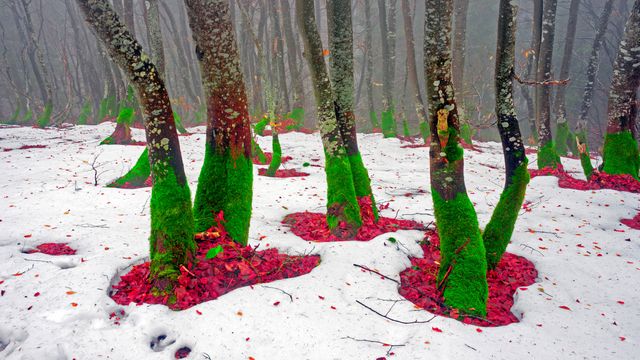 Trees on the northern slope of Mount Khomyak in the Carpathian Mountains, Ukraine
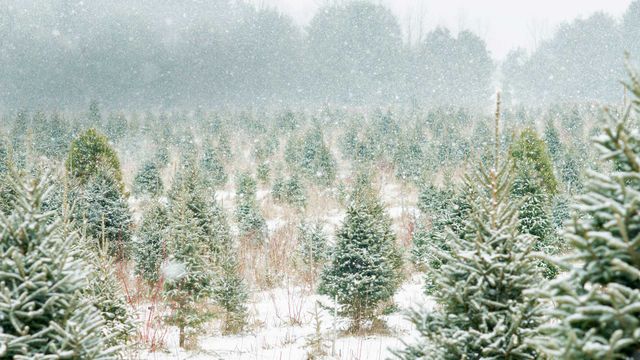 Christmas tree farm in Ontario, Canada
 Glass igloos at the Kakslauttanen Arctic Resort in Saariselkä, Finland
 A fossilized carboniferous fern
Bing Today Images