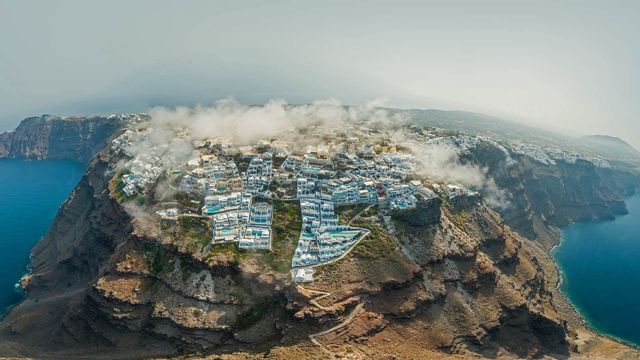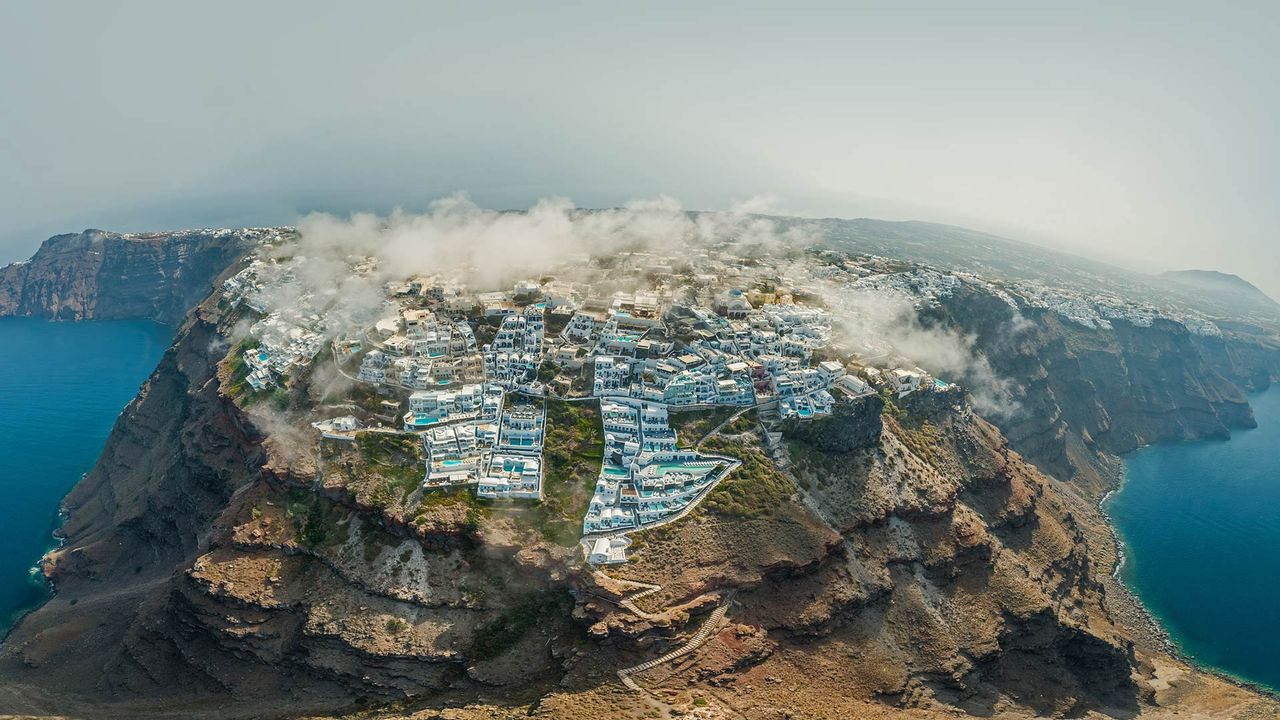
Aerial view of Santorini island, Greece
© Amazing Aerial Agency/Offse
Santorini through the clouds
With its romantic sunsets, dazzling ocean views and whitewashed buildings on rocky clifftops, Santorini (aka Thera) is an island idyll in the Aegean Sea. But beneath this Greek island’s tranquility lies an explosive history, for this is the site of one of the largest volcanic eruptions in recorded history. The Minoan eruption, about 3,600 years ago, caused the centre of the Thera volcano to collapse into the ocean, leaving Santorini a jagged, crescent-shaped moon above the sea.
When the volcano blew its top, Santorini was home to a thriving outpost of the Minoan civilisation. A farming and fishing community had been established at Akrotiri on the island around 7,000 years ago, which had developed into a prosperous city built largely on trade. Akrotiri had paved streets, delicate pottery, a drainage system and multi-storey buildings.
But its fortunes ended abruptly. The Minoan eruption buried the city in pumice and ash. Extensive archaeological excavations began in 1967, revealing artefacts that were remarkably well preserved by the volcanic material; particularly the elegant, colourful frescoes. It seems Santorini has always been a site for beautiful things.
Related Images
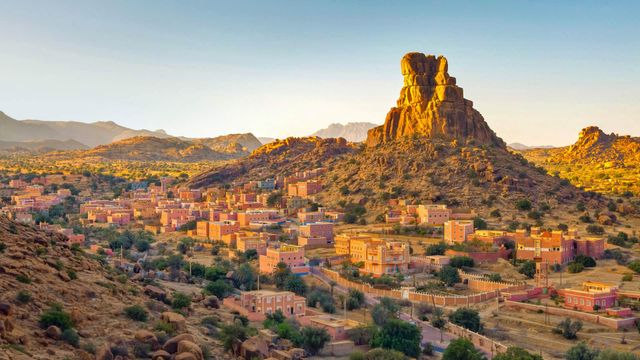 The village of Aguerd Oudad and the larger town of Tafraout in Morocco
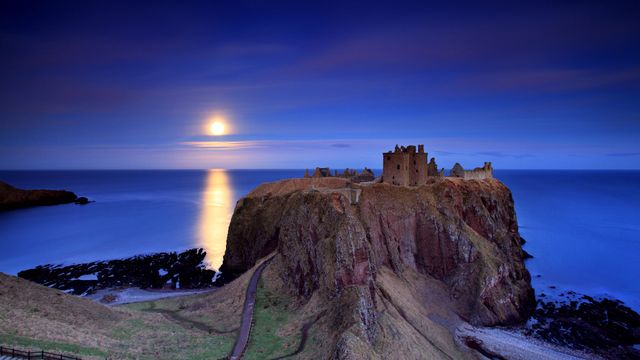 Full moon rising over Dunnottar Castle near Stonehaven on the north-east coast of Scotland
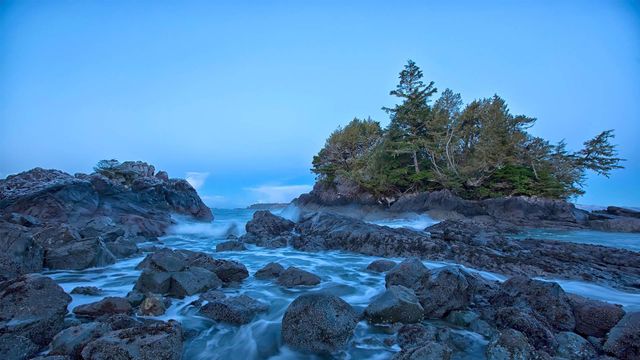 Shoreline near Tofino on Vancouver Island, British Columbia, Canada
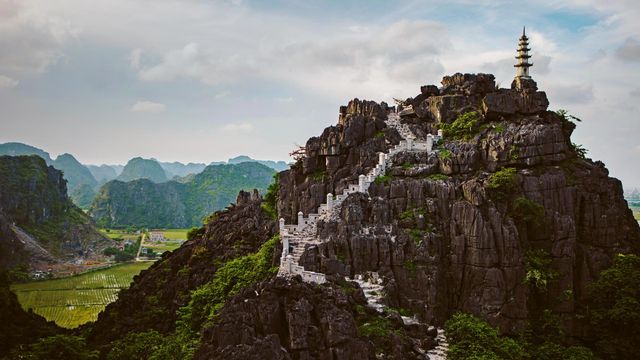 Mua Caves in the Ninh Bình province of Vietnam
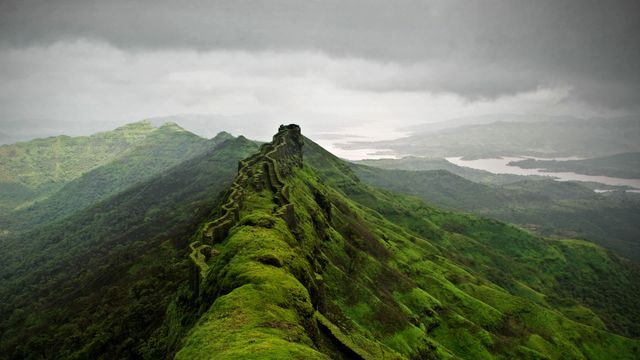 Rajgad Fort near Pune, India
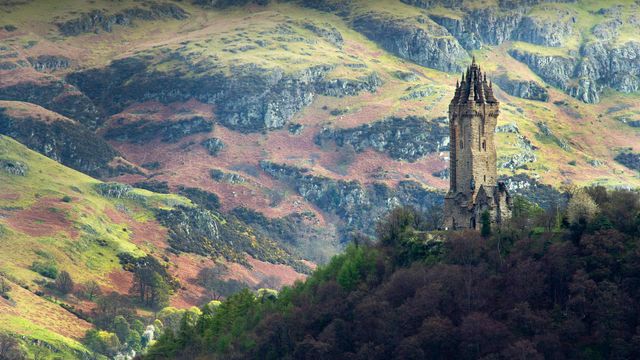 The National Wallace Monument overlooking Stirling in Scotland
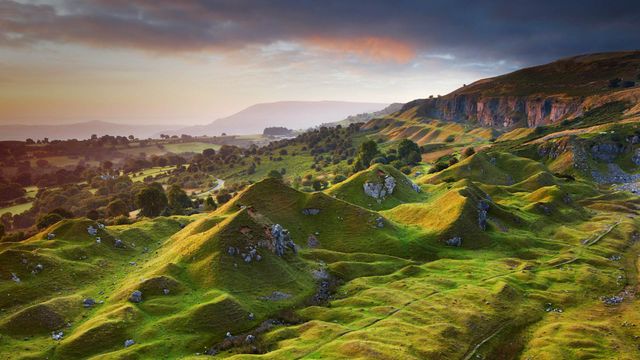 The Llangattock Escarpment in the Brecon Beacons National Park, Powys, Wales
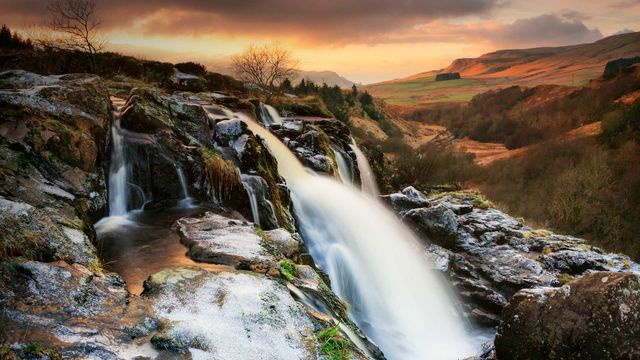 Loup of Fintry waterfall on the River Endrick, Scotland
Bing Today Images