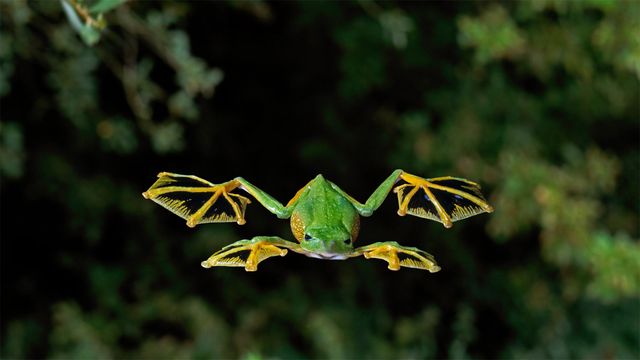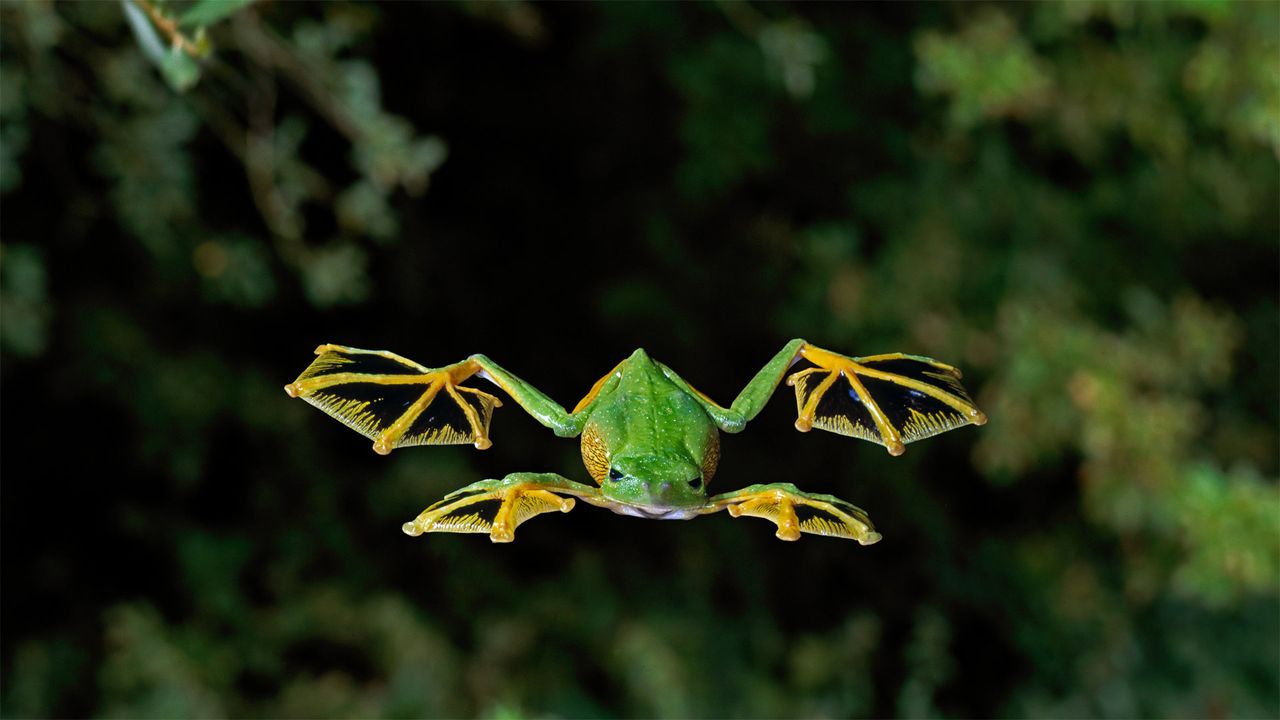
A Wallace's flying frog glides to the forest floor
© Stephen Dalton/Minden Picture
It's leap day!
For leap day (the extra day added to February every four years), we're looking at a Wallace's flying frog. Also known as parachute frogs, these creatures live in the tropical jungles of Malaysia and Borneo. They spend most of their time in trees, gliding down to the ground to mate and lay eggs. They 'fly' by leaping and using their webbed fingers and toes to glide as far as 50 feet.
Leap years keep our calendar (the Gregorian calendar) aligned with the Earth's revolutions around the Sun. People sometimes refer to a calendar year as a 'trip around the Sun' - but that trip takes longer than 365 days. It really takes 365 days, 5 hours, 48 minutes and 45 seconds. Adding an extra day every four years solves the problem. Almost. To keep our calendar mostly synchronised with the astronomical year, some further adjustments need to take place. Years that are divisible by 100 are not leap years unless they're divisible by 400. Yep, it's confusing, and that’s before we even get on to leap seconds - but that may be best left for another day.
Related Images
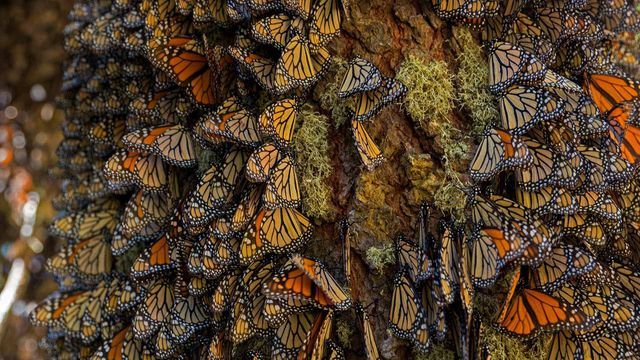 Monarch butterflies wintering in Michoacán, Mexico
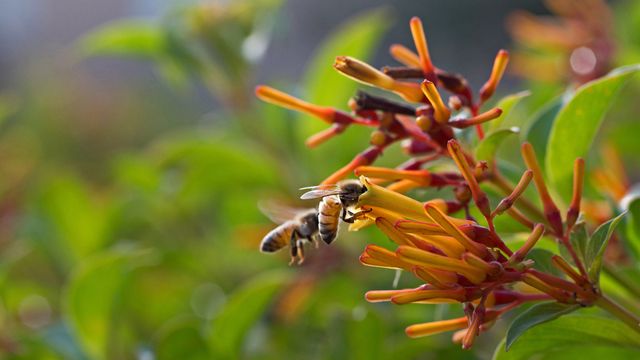 Bees drinking nectar
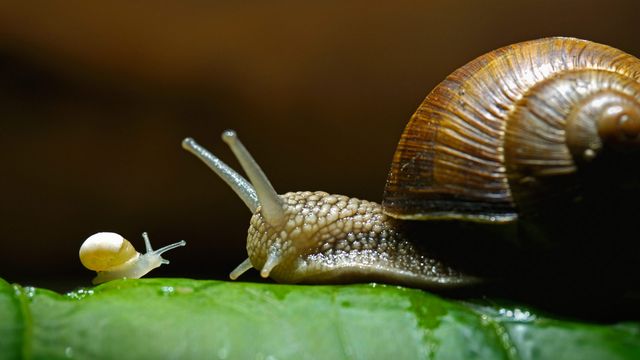 Roman snails, also called edible snails
 Octopus spotted during a night dive near Kona, Hawaii, USA
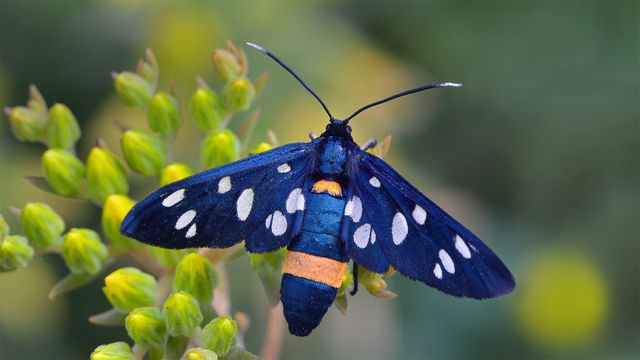 Nine-spotted moth in Switzerland
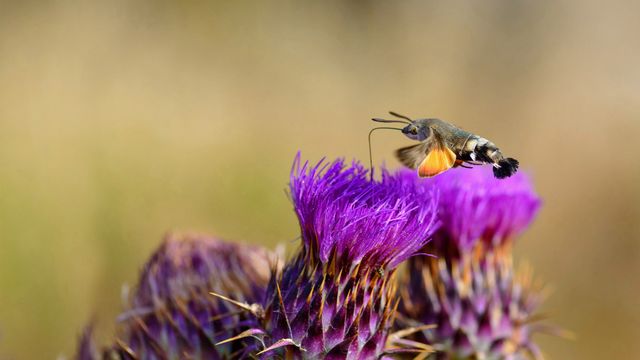 Hummingbird hawk-moth feeding on flower, Sardinia, Italy
 A honey bee (Apis mellifera) covered in pollen in pumpkin, Germany
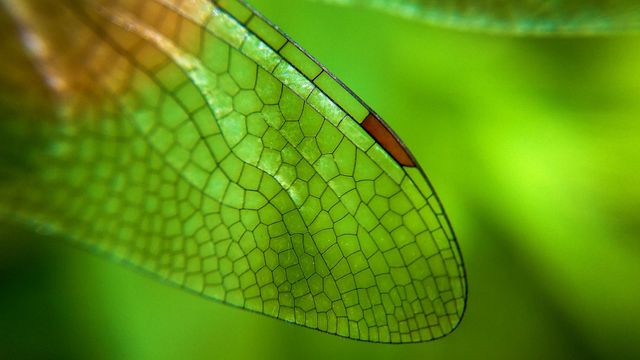 Close-up of a dragonfly wing
Bing Today Images