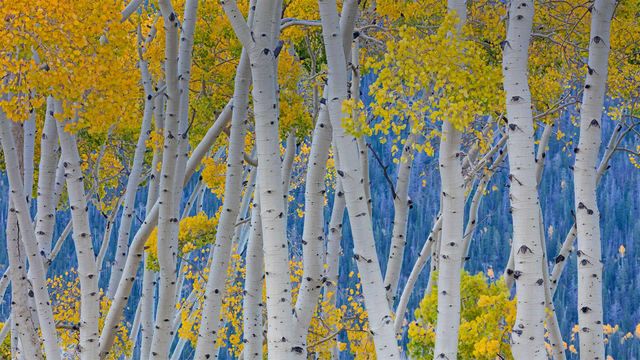
The Pando quaking aspen in Fishlake National Forest, Utah
© Don Paulson/Danita Delimon
Fall comes to the Pando. Fall comes to the Pando
All is not as it appears to be here at the Pando, in Utah's Fishlake National Forest. At first glance, visitors likely see a massive grove of quaking aspen trees, their leaves dancing in the wind. But the Pando is not many trees; instead, it's a single organism. Like many aspen groves, each of the 40,000 trees in the Pando are genetically identical stems that sprout from the same root system. First discovered in 1968, the Pando made waves in the scientific world. It's become recognized as one of the heaviest known organisms—weighing at least 6,000 metric tonnes—and one of the oldest known living organisms. Scientists estimate it's upwards of 80,000 years old, having endured the last ice age and countless forest fires. It got to be so old partly because most of the organism is protected underground.So, while an individual stem can die, the organism as a whole survives. It's only recently that human activity has threatened the Pando’s health, with drought, grazing, and fire suppression interfering with its growth. Pando translates as 'I spread out,' in Latin, a reference to the way it extends itself through cloning. But its delicate, fluttering leaves—which turn golden this time of year—have lent it another moniker: the Trembling Giant.
Related Images
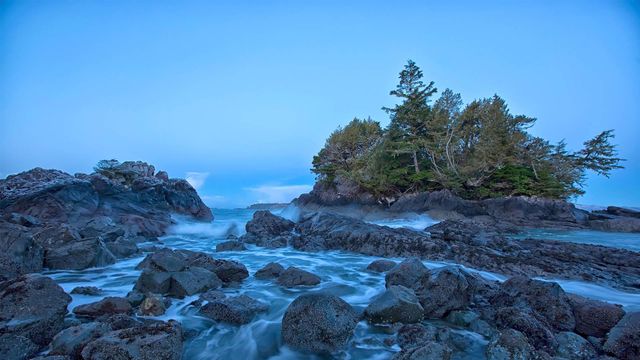 Shoreline near Tofino on Vancouver Island, British Columbia, Canada
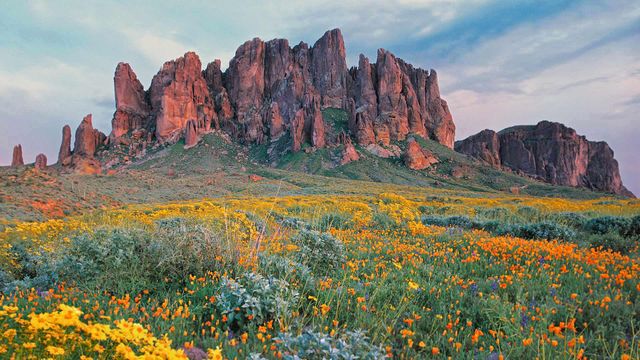 Wildflowers in bloom at Lost Dutchman State Park in Arizona
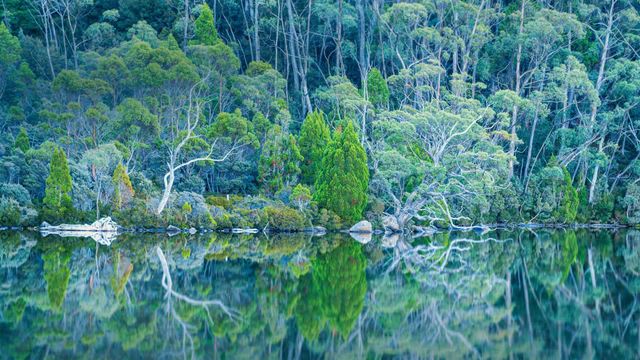 Lake Dobson in Mount Field National Park of Tasmania
 Frontenac Castle in Old Quebec City
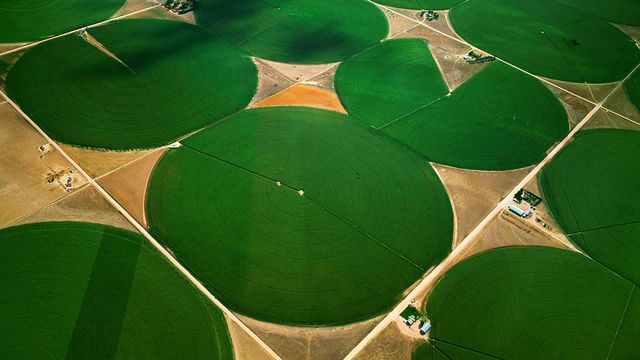 Circular agricultural fields in Morgan County, Colorado
 Vinicunca Mountain in the Cusco Region of Peru
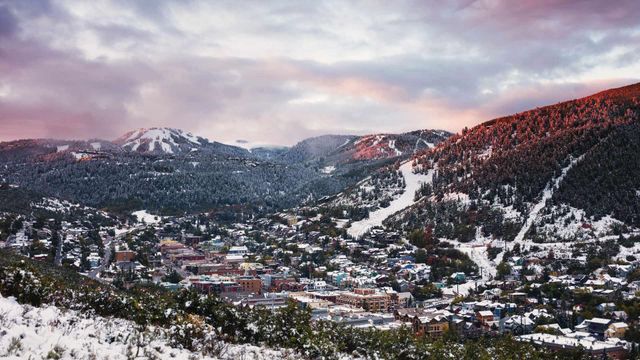 Park City, Utah, for the Sundance Film Festival, which begins today
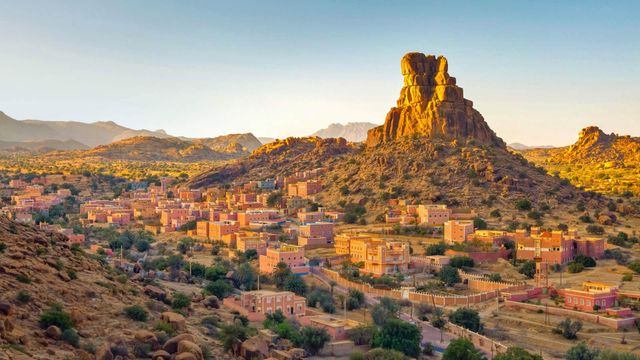 The village of Aguerd Oudad and the larger town of Tafraout in Morocco
Bing Today Images