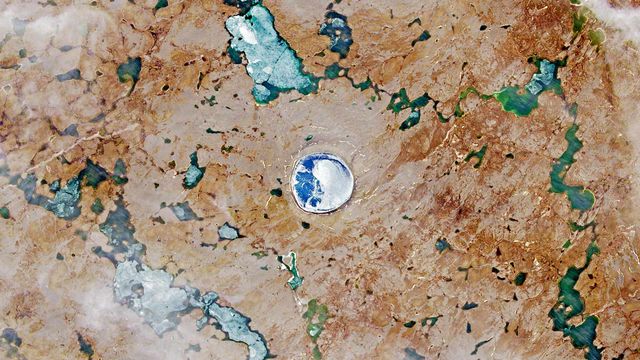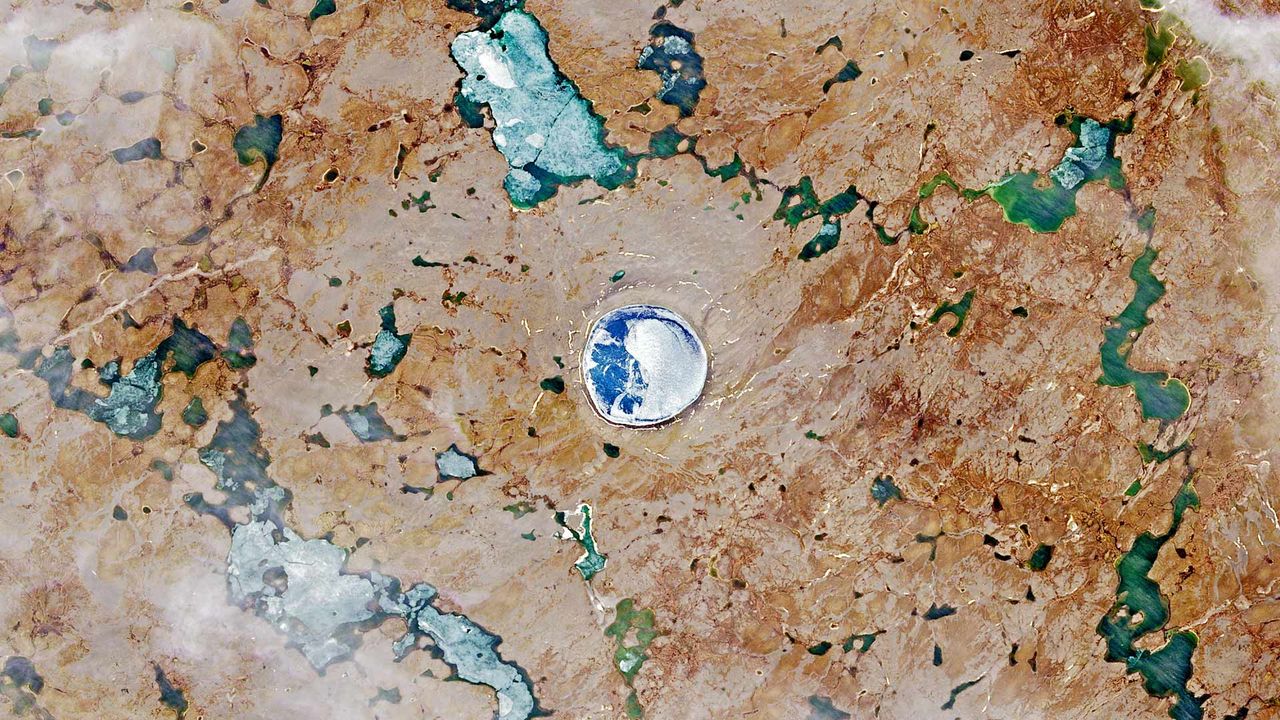
A satellite image of the Pingualuit asteroid impact crater in Quebec
© USGS/NASA Landsat data/Orbital Horizon/Gallo Images/Getty image
Mysterious sighting from above. A natural wonder
Upon its discovery as a mysterious sighting from above, scientists and geologists concluded the structure to be a crater produced by a meteorite which crashed into Earth 1.4 million years ago. Amidst the dark terrain of this site in northern Quebec lies an almost perfectly circular lake with a diameter of 3 kilometres. This lake is known as the Pingualuit Crater Lake and is said to have the purest freshwater in the world. Without any inlets or outlets, the water level is maintained by evaporation and precipitation. The discovery of the Pingualuit Crater led to exploration of more than 20 impact structures in Canada.
Related Images
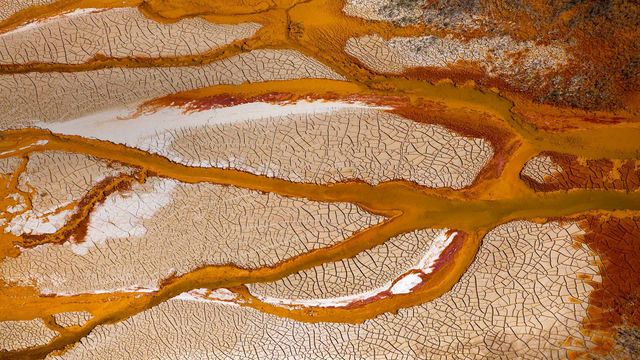 Channels of the Rio Tinto in Spain
 Coloured corn on the cobs at ByWard Market, Ottawa
 Blackbird eating a crab apple in a garden in Wiltshire, United Kingdom
 Arctic redpoll nest in Lapland, Finland
 Clusters of dark purple grapes hanging on a vine in Penticton, B.C.
 Hardened maple syrup on a wooden stick sitting on ice, Elmira, Ontario
 Gewurztraminer grapes on vine at autumn harvest in Okanagan Valley, B.C.
 Close up image of colourful Indian corn kernels in Mississauga, ON
Bing Today Images

Vale of Clwyd, Wales
Jan 13, 2026


Road to Hana, Maui, Hawaii
Jan 13, 2024



Cape Spear Lighthouse near St. John’s, Newfoundland
Jan 13, 2018