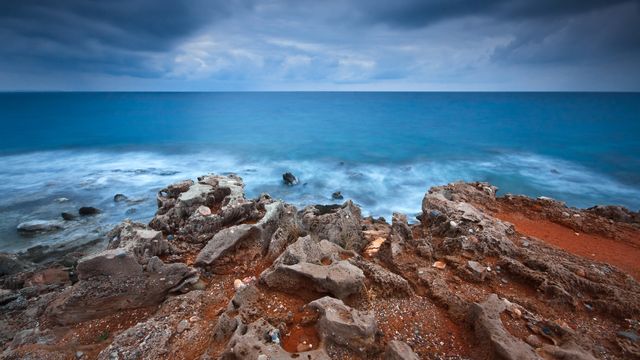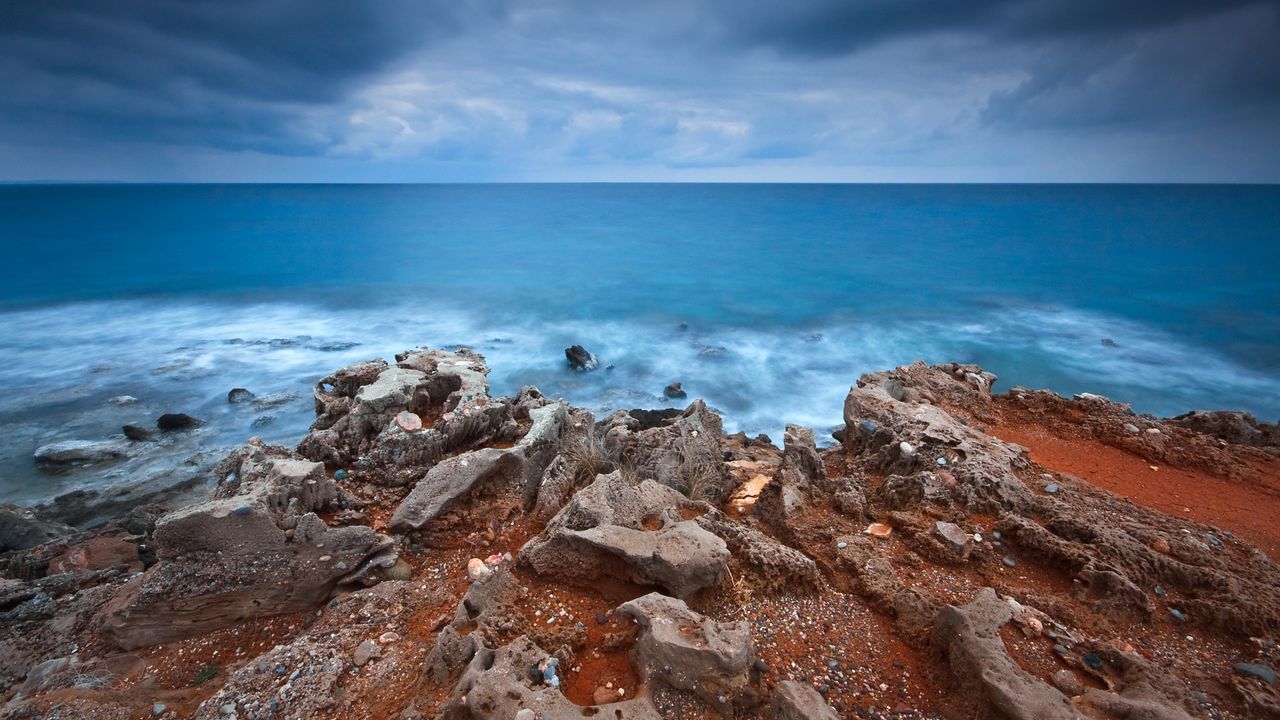
Weathered coastal rocks, Crete, Greece
© milangonda/iStock/Getty Images Plus
Soulful shores
Now namesake to his home island's international airport, the novelist Nikos Kazantzakis wrote, 'There is a kind of flame in Crete—let us call it 'soul'—something more powerful than either life or death.' He was on to something: Since the Minoan people entered the Bronze Age around 3100 BCE, this largest of Greece's many islands has been host to Europe's oldest technologically advanced civilization. The Minoan culture existed for more than 2,000 years and may have been brought down in part by the massive volcanic eruption of Thera on present-day Santorini, another Aegean island. But true to Kazantzakis' words, humans persisted in inhabiting the island despite hardship, and today it's home to more than 600,000 people.
These craggy shores, visible in the foreground, represent Crete's diverse geological makeup. The island's predominantly limestone composition has been sculpted over millennia by tectonic uplift and erosion, creating a distinctive karst topography with numerous caves and gorges. This continuous geological activity, including frequent seismic events, shapes the island's rugged landscape and its rich subaquatic environments. Such enduring natural forces reflect the powerful, persistent human spirit that has defined Crete throughout its long history.
 Green Algae Volcanic Rock Formations, Laomei Green Reef, Taiwan
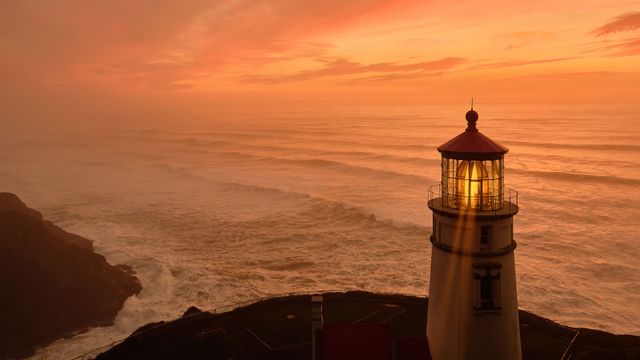 Lighthouse at orange sunset over ocean, West Coast
 Dark Mountain Range, Ocean Waves, Coastal Rock, Small Isles
 Cliff lighthouse, Winding road light trails, Starry night ocean
 Morro Dois Irmãos, Fernando de Noronha, Brazil
 Puducherry Promenade Pier, Sunset Long Exposure Ocean, Puducherry, India
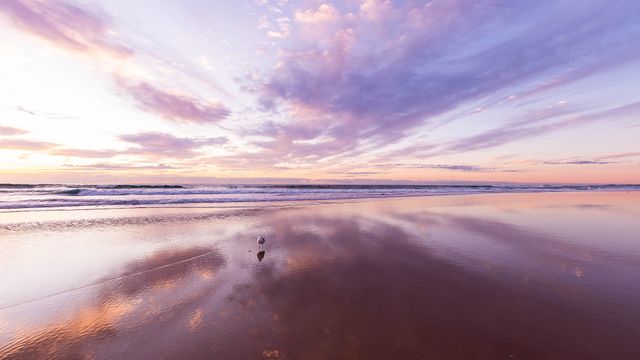 Seagull, wet beach, pink purple sunset sky, ocean waves
 Sea Stacks, Ocean Waves, Dusk Sky, Uradome Coast, Tottori, Japan