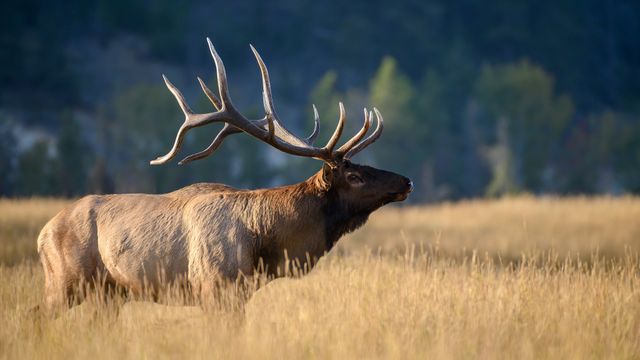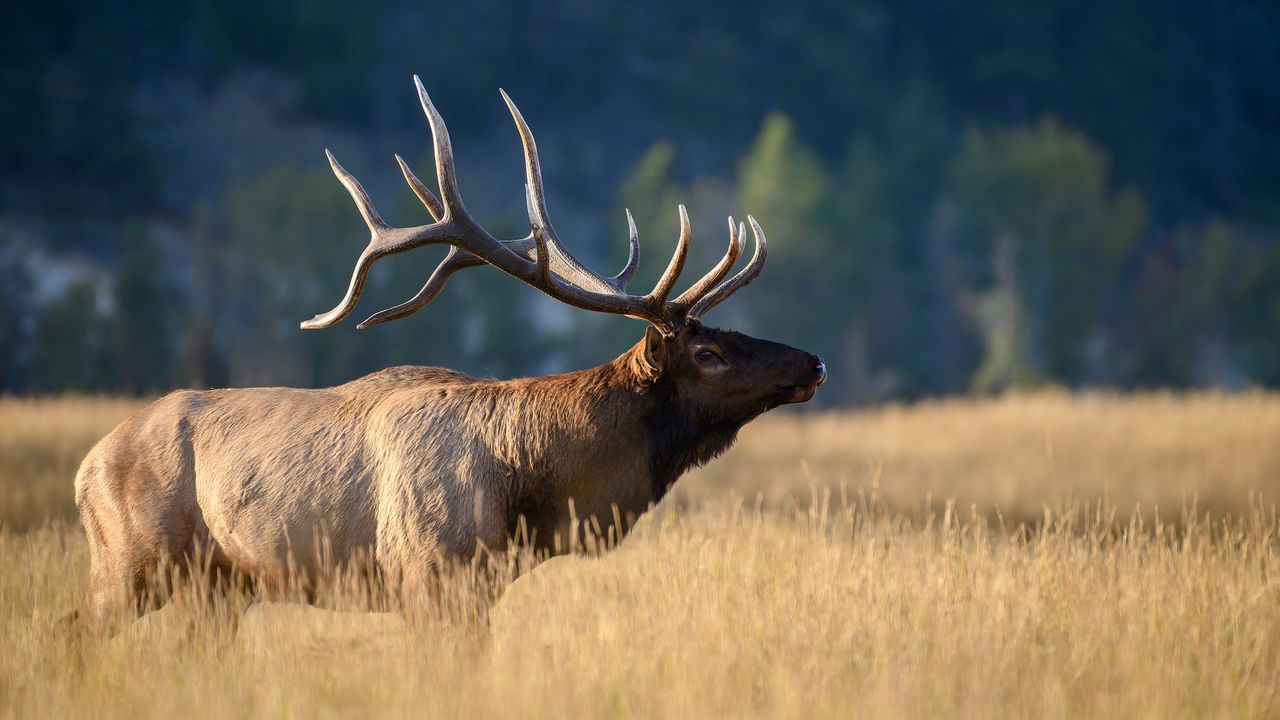
Rocky Mountain elk, Yellowstone National Park, Wyoming, United States
© Dan Pepper/iStock/Getty Images Plus
Ample antlers
Elk once roamed across North America, but their populations dropped significantly as Europeans settled the continent. Some subspecies of elk eventually became extinct. Our impressively antlered friend here, the Rocky Mountain elk, is thought to have survived due to its habitat—the relatively inaccessible ranges of the Rocky Mountains. Conservation efforts starting in the early 20th century introduced these survivors into areas where other native herds had long since disappeared. So, not only are elk thriving once again in native habitats like western Canada, Wyoming, and Colorado, but Rocky Mountain elk also roam forests as far away as Kentucky, North Carolina, and Washington state.
The prominent antlers of a bull elk are made of bone. These antlers grow rapidly each spring, covered in a nutrient-rich velvet that provides blood flow. Bulls use their antlers for sparring during the autumn rut, establishing dominance within the herd and attracting mates. They shed the hardened antlers in late winter, providing calcium and other minerals to the forest floor ecosystem before regrowing a new set.
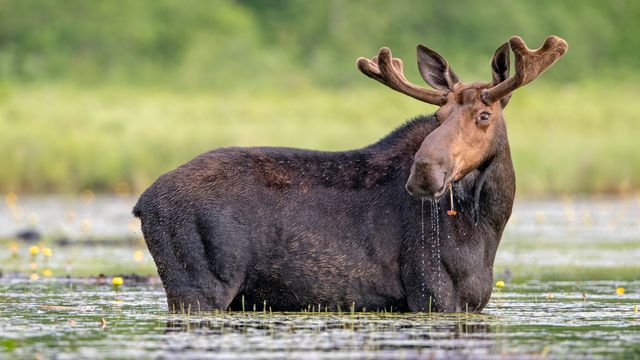 Bull Moose in water, Maine
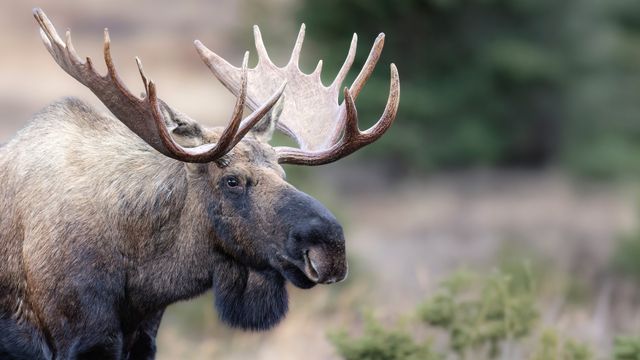 Bull Moose
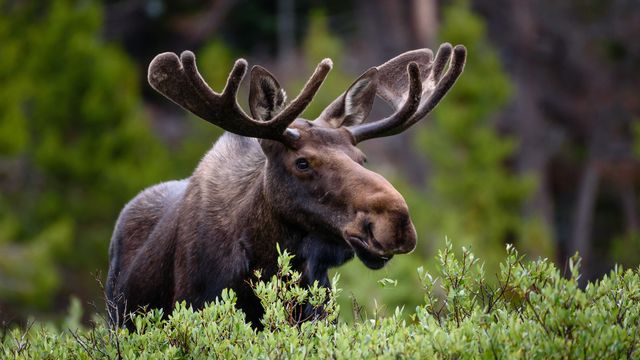 Bull Moose, Mountains
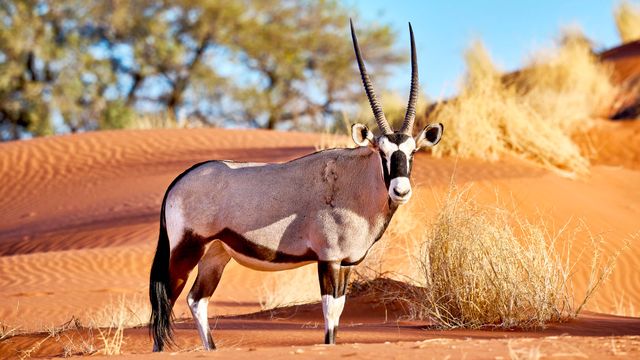 Gemsbok on red sand dunes
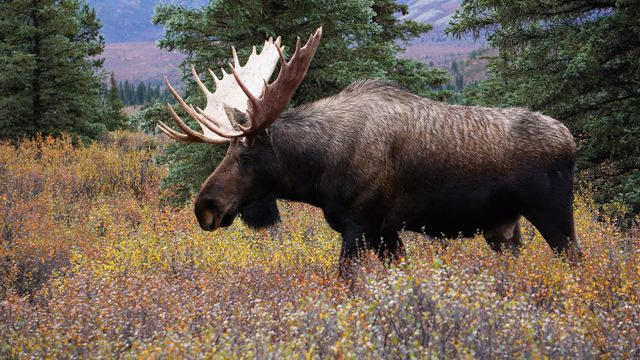 Bull moose, autumn forest
 Springbok in savanna, Madikwe Game Reserve, South Africa
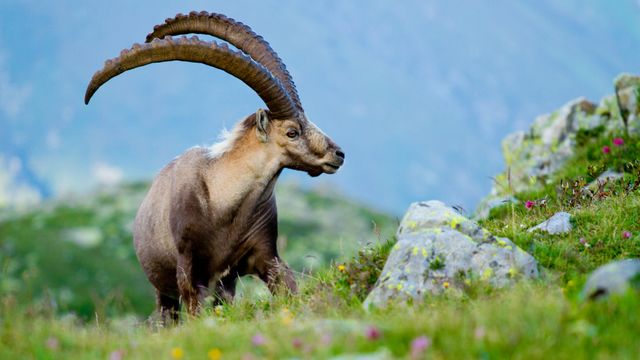 Alpine Ibex on rocky mountain slope