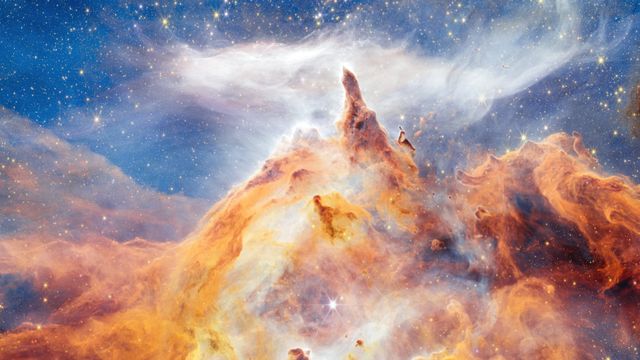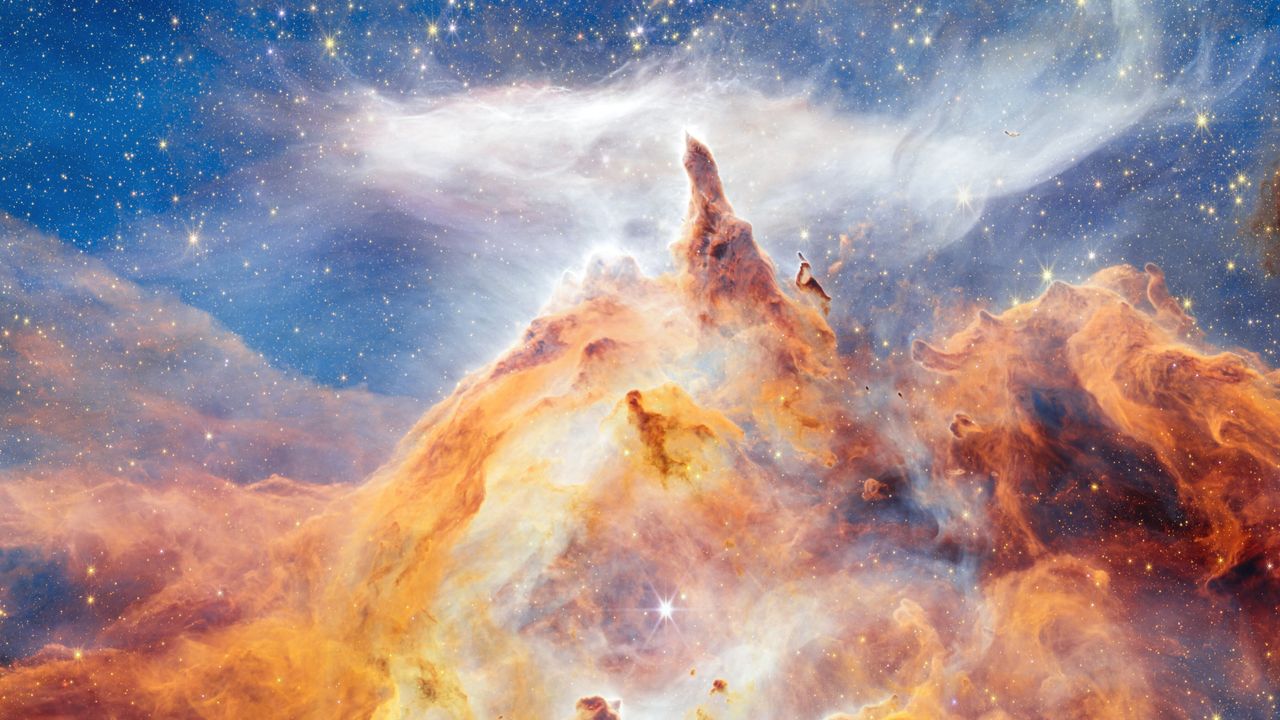
Orange gas pillars and stars in Lobster Nebula
© NASA, ESA, CSA, and STScI Image Processing: M. Garcia Marin, A. Pagan (STScI)
Stars in a pinch
From a wider perspective, the Lobster Nebula indeed looks like an astronomically-sized arthropod claw, but a zoomed-up view of this space crustacean reveals complexity we've only begun to comprehend. The numberless twinkles in our image belong to newborn stars of the open cluster Pismis 24, a stellar nursery hosting some of the heaviest and highest-intensity stars we know of. Pismis 24-1, seen here at low center, is the most massive star in the cluster. Once considered the largest known star, it was later found to be multiple stars—each still dozens of times bigger and brighter than the sun.
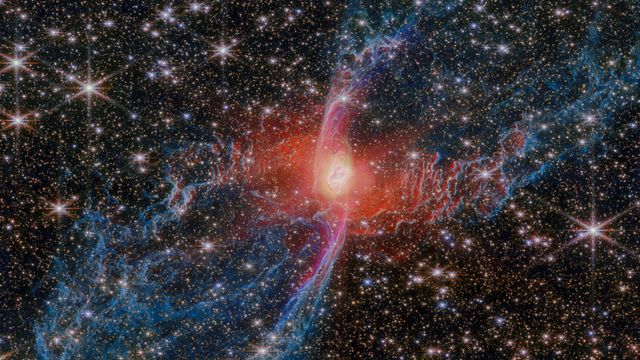 Red Blue Filaments Nebula
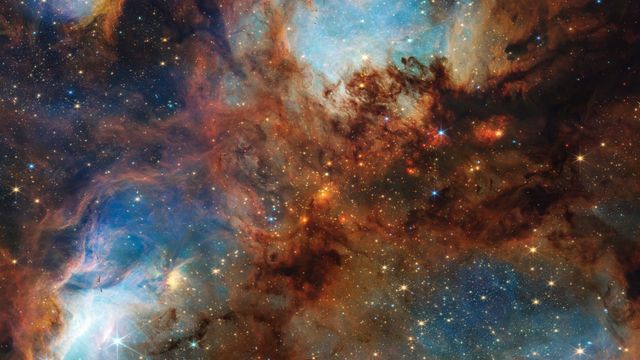 Blue Orange Nebula, Stardust, Stars
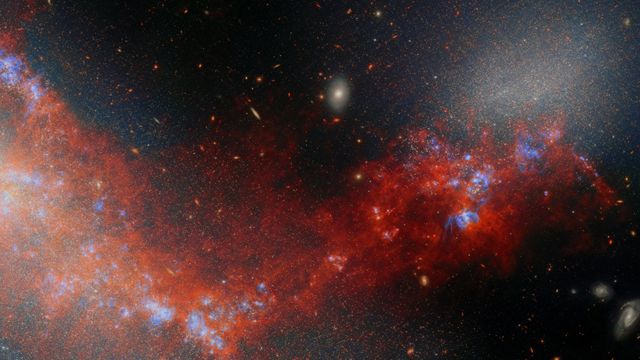 Interacting Galaxies
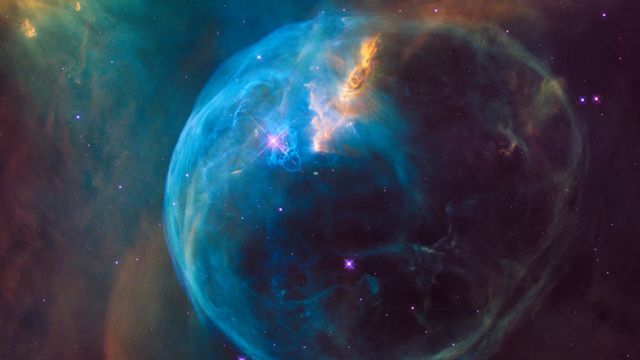 Blue Bubble Nebula
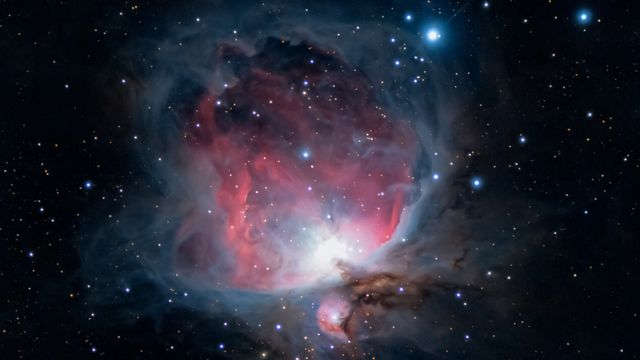 Orion Nebula, Italy
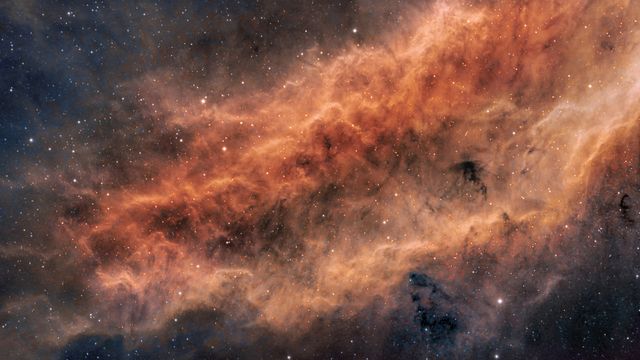 Orange Nebula
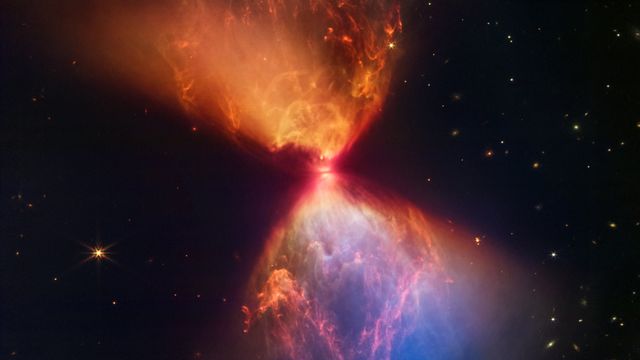 Protostar L1527 surrounded by nebulous matter
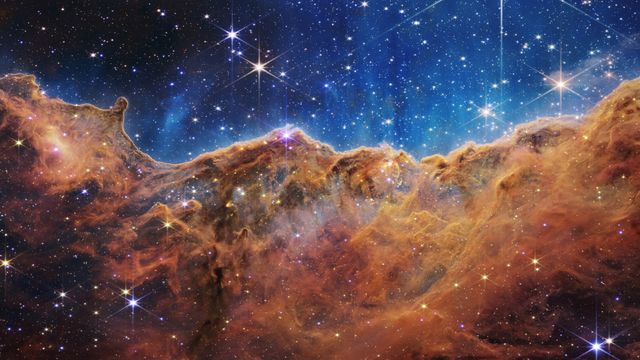 Cosmic Cliffs of NGC 3324