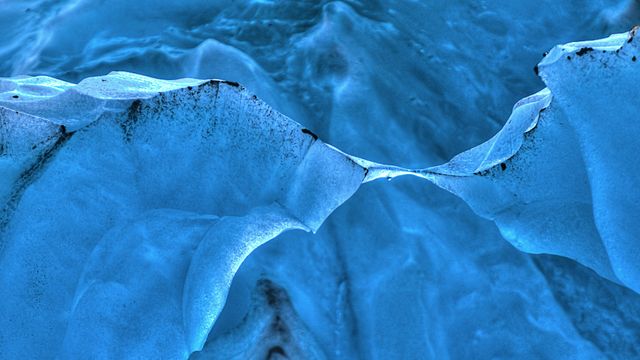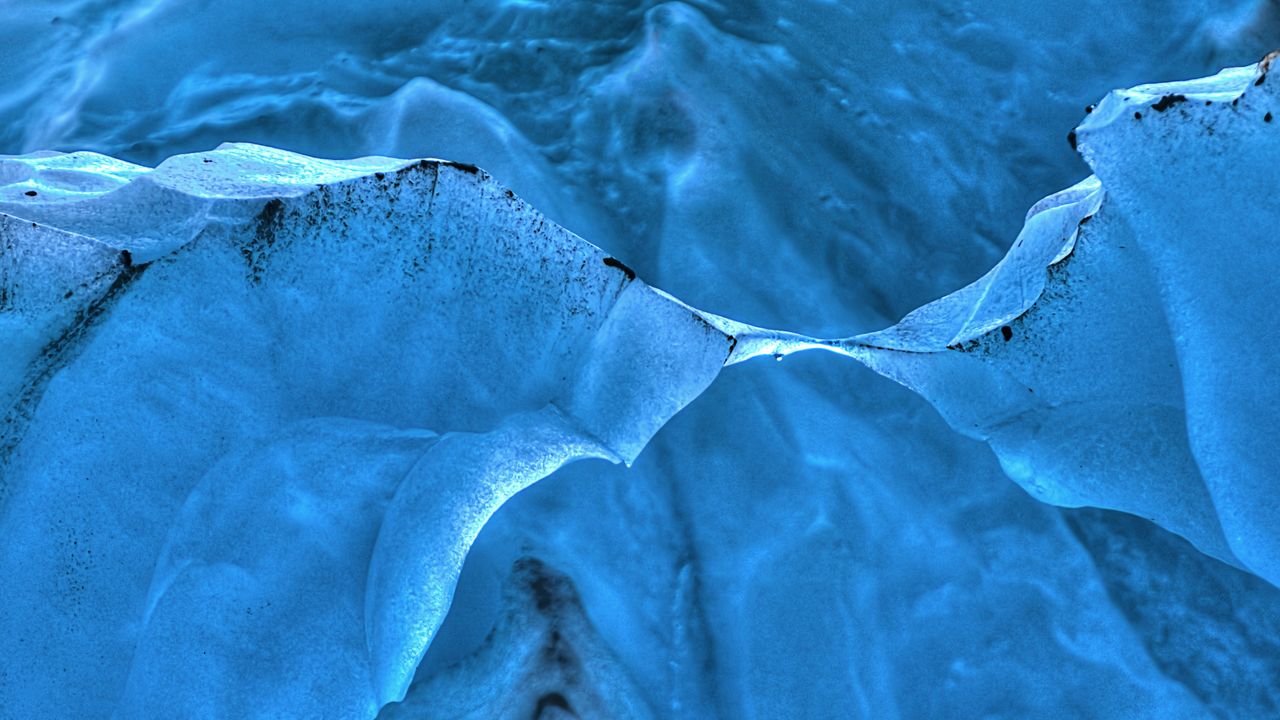
Blue Ice Formation Talking Blues
© Stolk/iStock/Getty Images Plus
Talking blues
Like the color of the sky, the cool blue of glacial ice results from tricks of the light. But in contrast to the Rayleigh scattering at work in the sky—where small particles deflect part of the visible spectrum before the eye can perceive it— glacier coloration happens on a molecular level. Water is composed of bonded oxygen and hydrogen, and all chemical bonds vibrate to some degree. In the case of highly compressed ice, the bonds vibrate at frequencies that cause light at the red end of the spectrum to be absorbed, never reaching the eye. Nearer the air-exposed surface of the ice, lighter or even chalk-white patches appear—an effect created by tiny air bubbles forming within the ice as it decompresses.
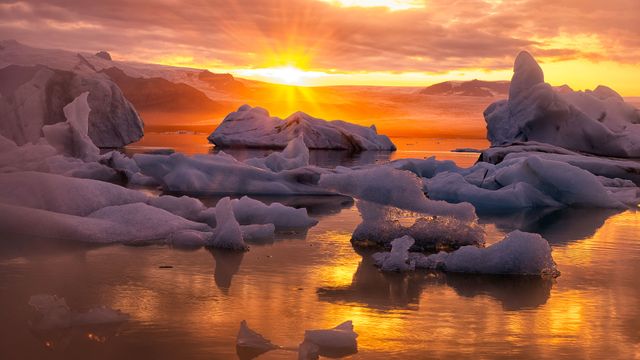 Glacial Lagoon Icebergs Sunset, Jökulsárlón, Iceland
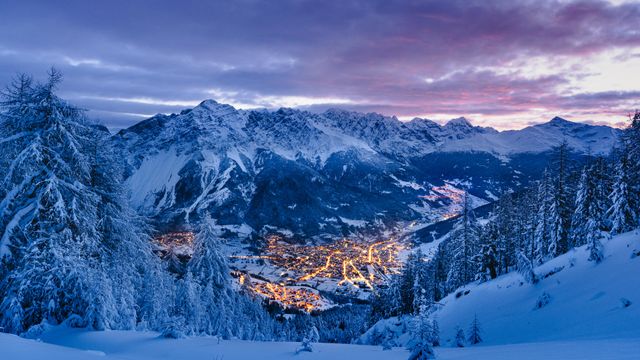 Illuminated mountain town, Bormio
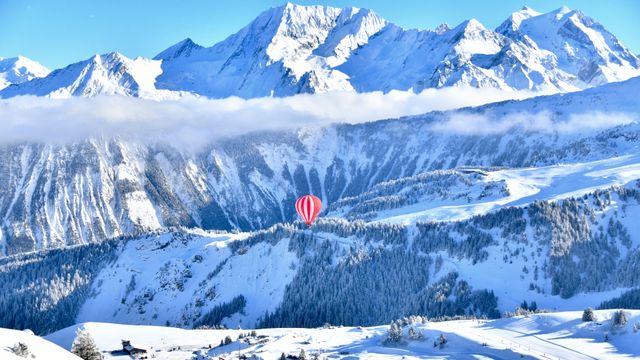 Candy-stripe hot air balloon, Courchevel
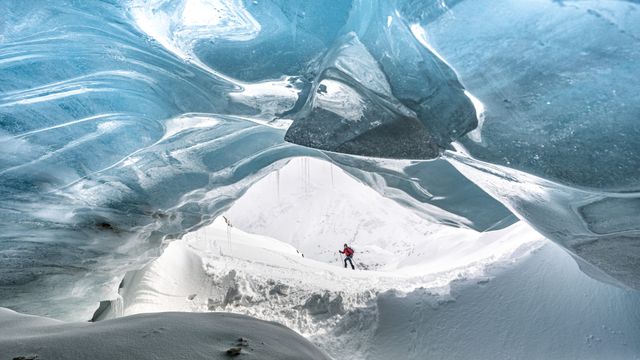 Melting blue glacier cave