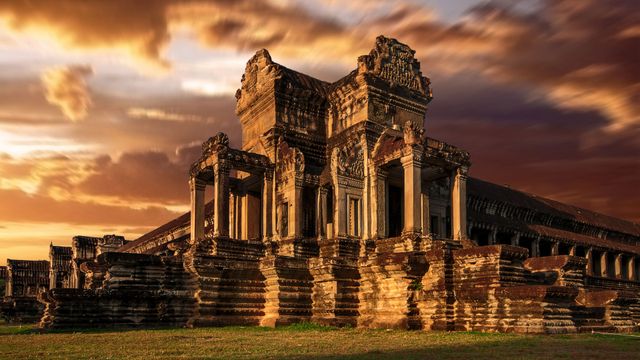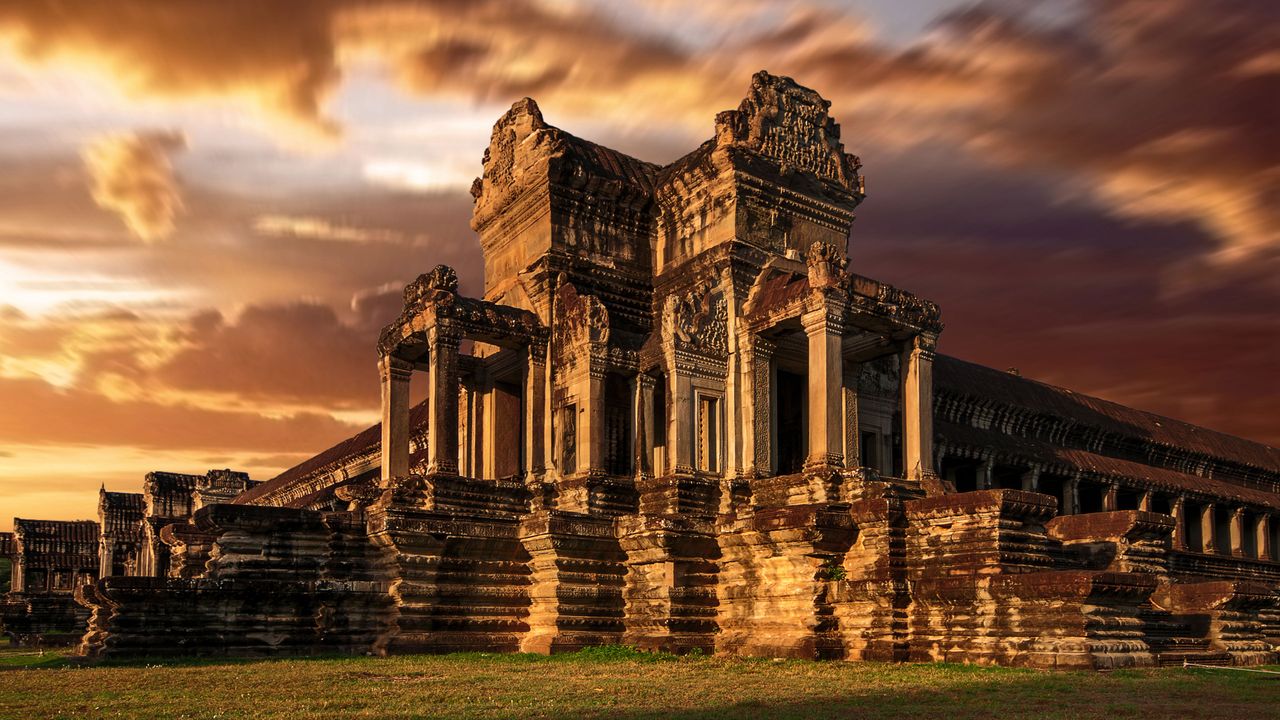
Angkor Wat Temple Sunset, Siem Reap, Cambodia
© Artie Photography (Artie Ng)/Moment/Getty Images
Stories etched in stone
Angkor Wat has been an important Buddhist center through most of its nearly 900-year history, so why is it covered in stone-carved scenes of Hindu mythology? The complex was built in 1150 CE under king Suryavarman II, a devotee of the Khmer Empire's traditional Hinduism. Within just a few decades—two kings and an enemy invasion later—the new Buddhist monarch Jayavarman VII began rededicating the temple to his own religion. Though some Hindu elements were removed, many remain: Bas-reliefs depict multitudes of apsaras and other Hindu figures, covering more than 12,000 square feet of the structure.
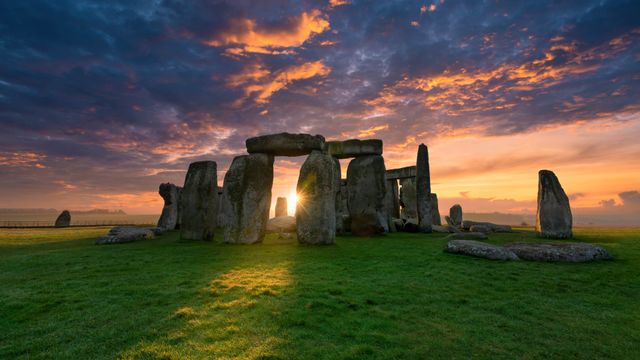 Stonehenge Megalithic Monument Sunrise, Wiltshire, England
 Seagull, wet beach, pink purple sunset sky, ocean waves
 Lighthouse at orange sunset over ocean, West Coast
 Big Game Reserve Waterhole Sunset, Tree Reflections
 Henry Mountains Desert Badlands Sunset, Utah
 Three pelicans flying ocean waves golden hour
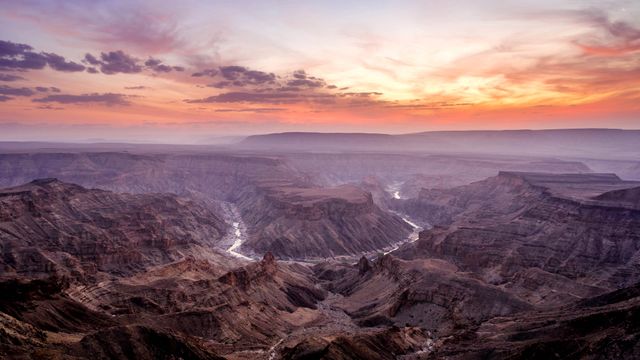 Fish River Canyon Sunset, Namibia
 Tre Cime di Lavaredo, snow, red sunset, Dolomites, Italy