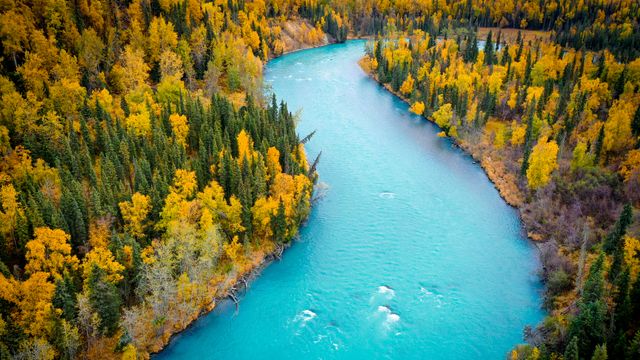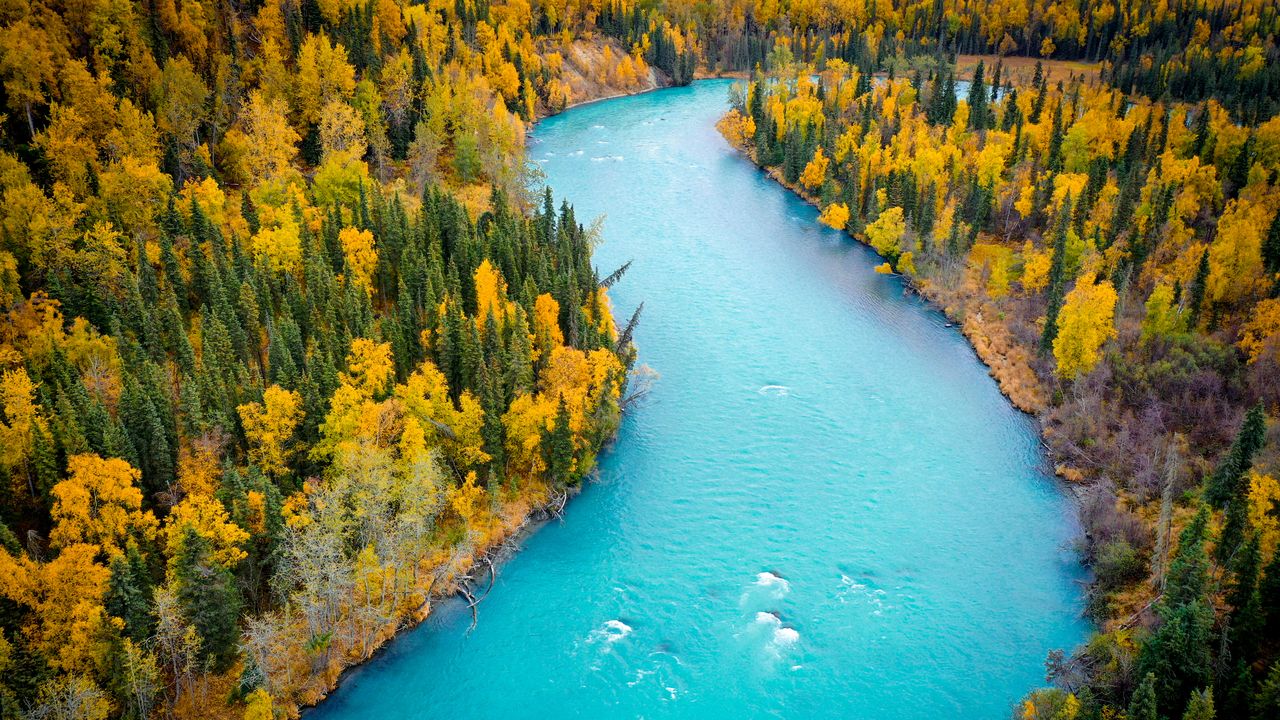
The blue, glacier-fed waters of the Kasilof River, Alaska, United States
© jared lloyd/Getty Image
Born of glaciers. Kasilof River, Alaska, United States
Seen from above, the Kasilof River winds like a ribbon of turquoise through Alaska's Kenai Peninsula in the United States. The vivid blue water comes from glacial silt carried downstream from Tustumena Lake, one of the largest freshwater lakes in the state. Flowing about 27 kilometres before emptying into Cook Inlet, the river is shorter than its famous neighbour, the Kenai, but no less remarkable.
The Kasilof begins in a landscape shaped by ice and remains closely tied to the region's fishing culture. Long an important resource for the Dena'ina people, the river later became central to commercial, subsistence and recreational fishing. Today, anglers come for runs of salmon, while visitors explore nearby recreation sites, campgrounds and nature trails. The community of Kasilof itself is a small fishing town on the peninsula's west coast, where river, forest and estuary habitats support abundant wildlife. Whether viewed from a drift boat or from the air, the Kasilof offers a striking glimpse of Alaska's glacial origins and enduring connection to the water.
Related Images
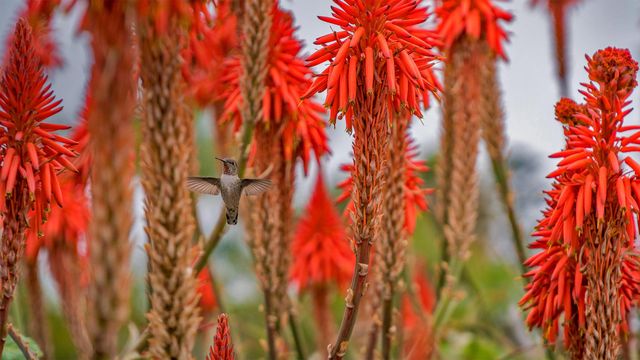 Hummingbird near blooming aloe vera in Laguna Beach, California
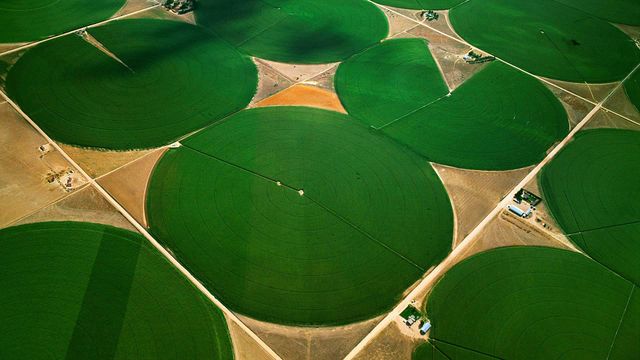 Circular agricultural fields in Morgan County, Colorado, USA
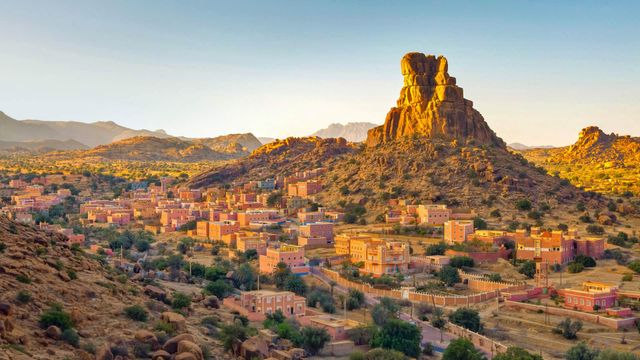 The village of Aguerd Oudad and the larger town of Tafraout in Morocco
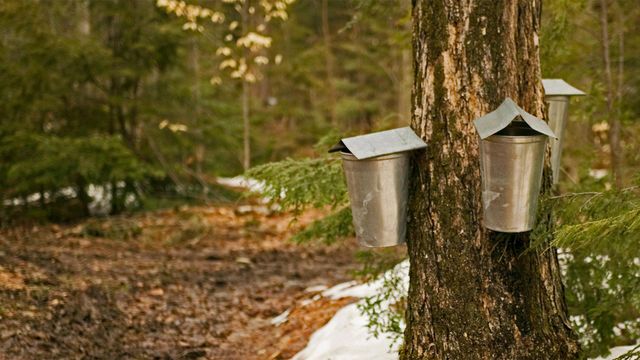 Sap-collecting buckets in Brome-Missisquoi, Quebec, Canada
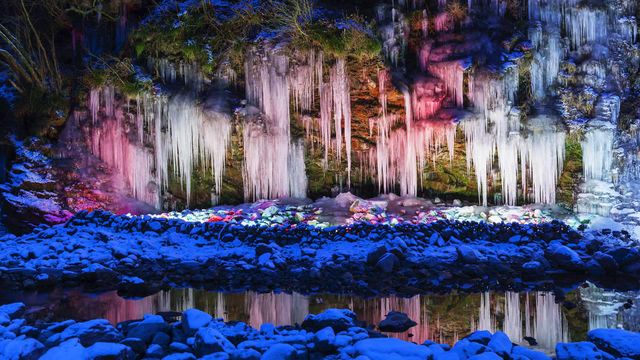 Illuminated icicles in Chichibu, Japan
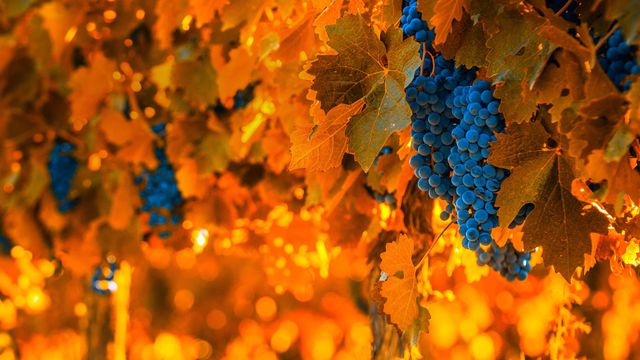 Grapes on the vine in Mendoza, Argentina, for the National Grape Harvest Festival
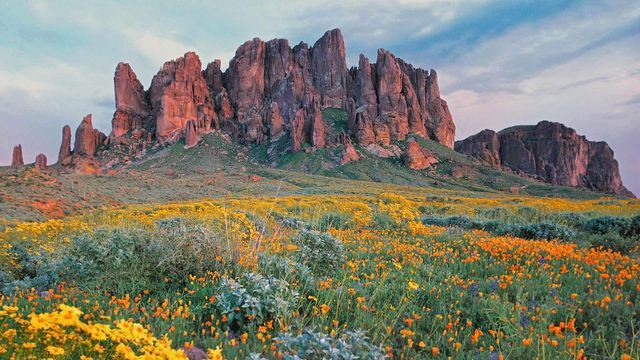 Wildflowers in bloom at Lost Dutchman State Park in Arizona, USA
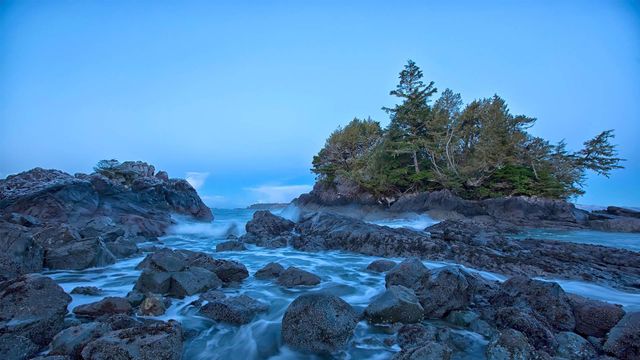 Shoreline near Tofino on Vancouver Island, British Columbia, Canada
Bing Today Images