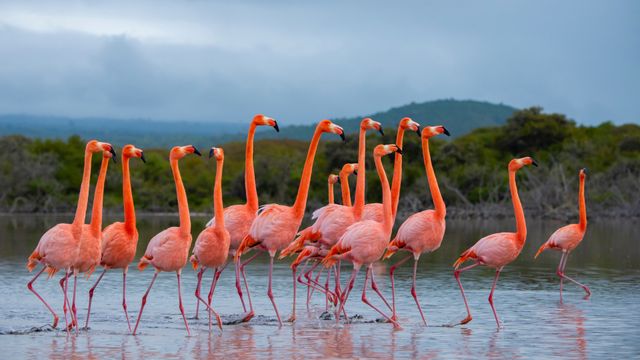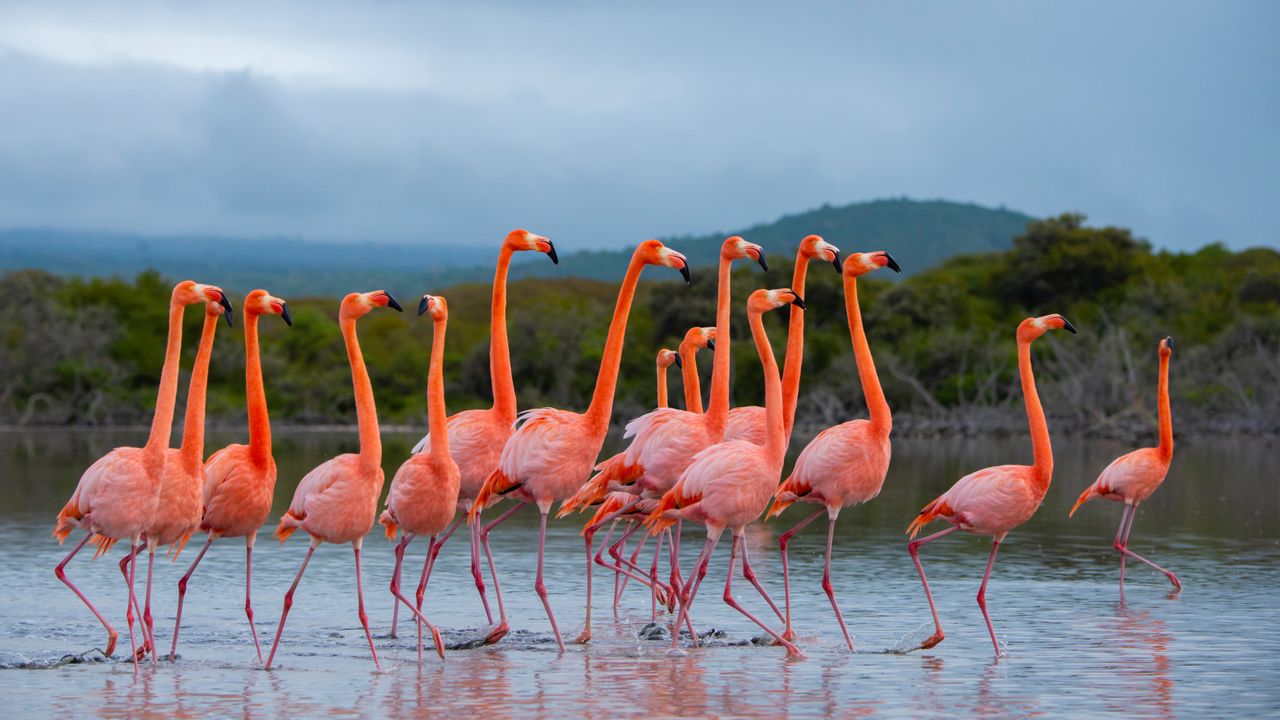
Flock of American flamingos, Isabela Island, Galápagos Islands, Ecuador
© Tui De Roy/Nature Picture Librar
American flamingos, Isabela Island, Galápagos Islands, Ecuador
The first thing you notice is the colour. A flock of American flamingos stands in the shallow water on Isabela Island, Galápagos Islands, and the water seems to borrow a hint of pink from their feathers. Those feathers were not always that colour. Flamingos hatch grey and gradually turn pink as pigments from algae and small crustaceans accumulate in their bodies.
The birds move slowly, with their heads upside down, sweeping their bills through the water to filter food such as brine shrimp and other tiny aquatic organisms. Every so often the flock shifts together, a reminder that flamingos are highly social birds that feed and rest in groups. When breeding season arrives, pairs build cone-shaped mud nests and lay a single egg above the waterline. Both parents incubate the egg and later feed the chick with a nutrient-rich crop secretion known as crop milk. The Galápagos population is relatively small, making these flocks an important part of the islands' wildlife.
Related Images
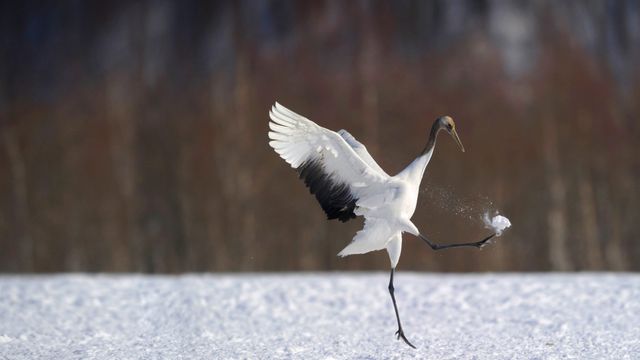 Japanese crane in Hokkaido, Japan
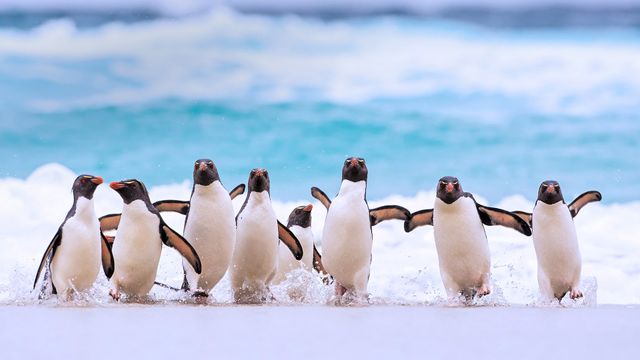 Southern rockhopper penguins on the Falkland Islands
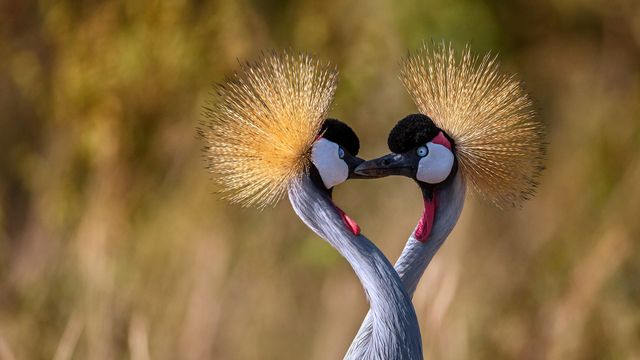 Grey-crowned cranes forming a heart shape
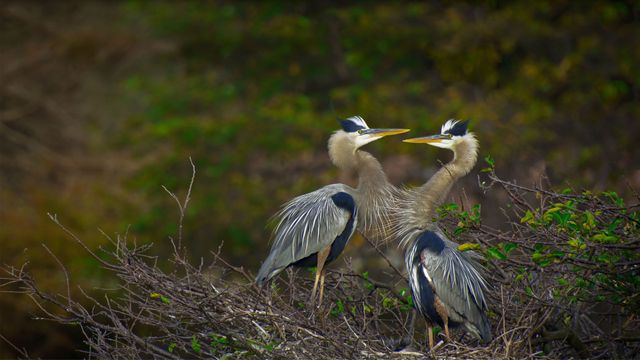 Great blue herons in the Wakodahatchee Wetlands, Delray Beach, Florida, USA
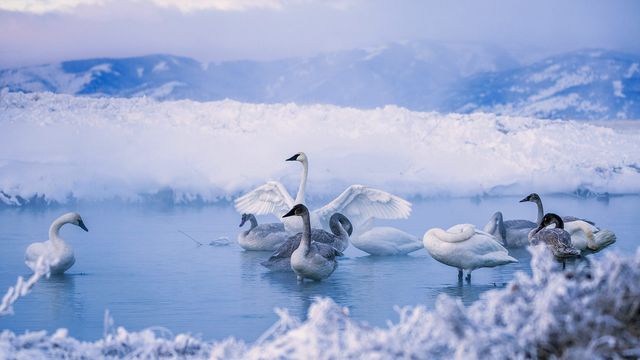 Trumpeter swans at Kelly Warm Springs, near Kelly, Wyoming
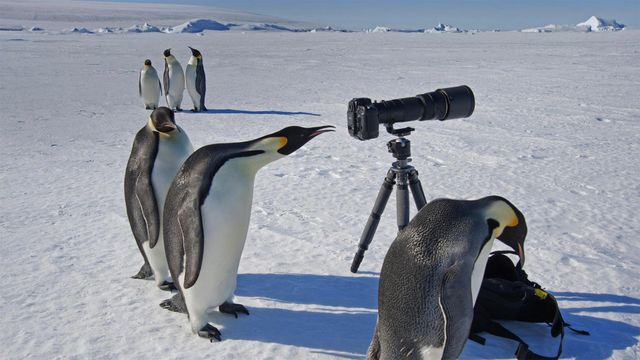 A group of curious Emperor penguins in Antarctica
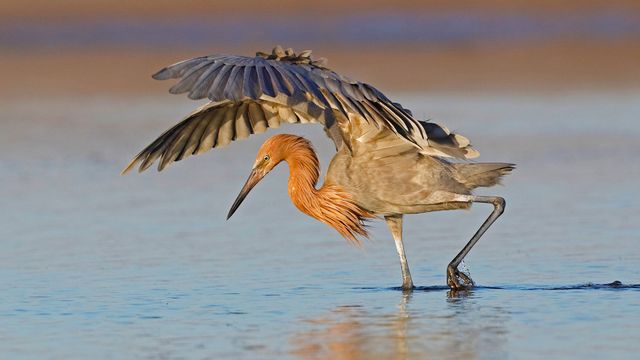 A reddish egret hunts in Fort De Soto Park, Florida
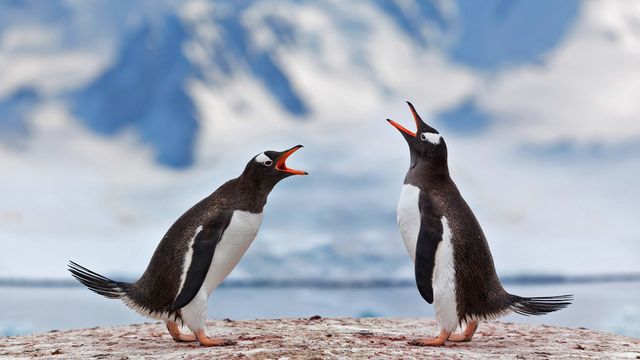 Gentoo penguins airing grievances in Antarctica
Bing Today Images