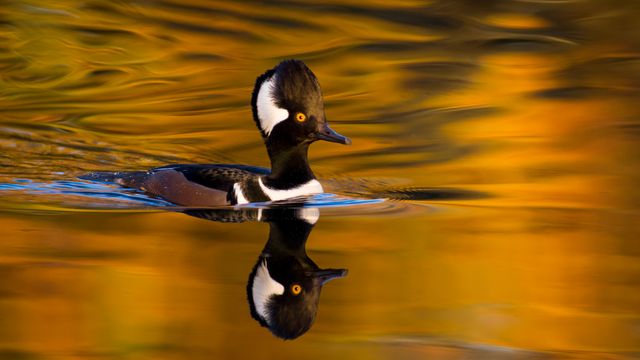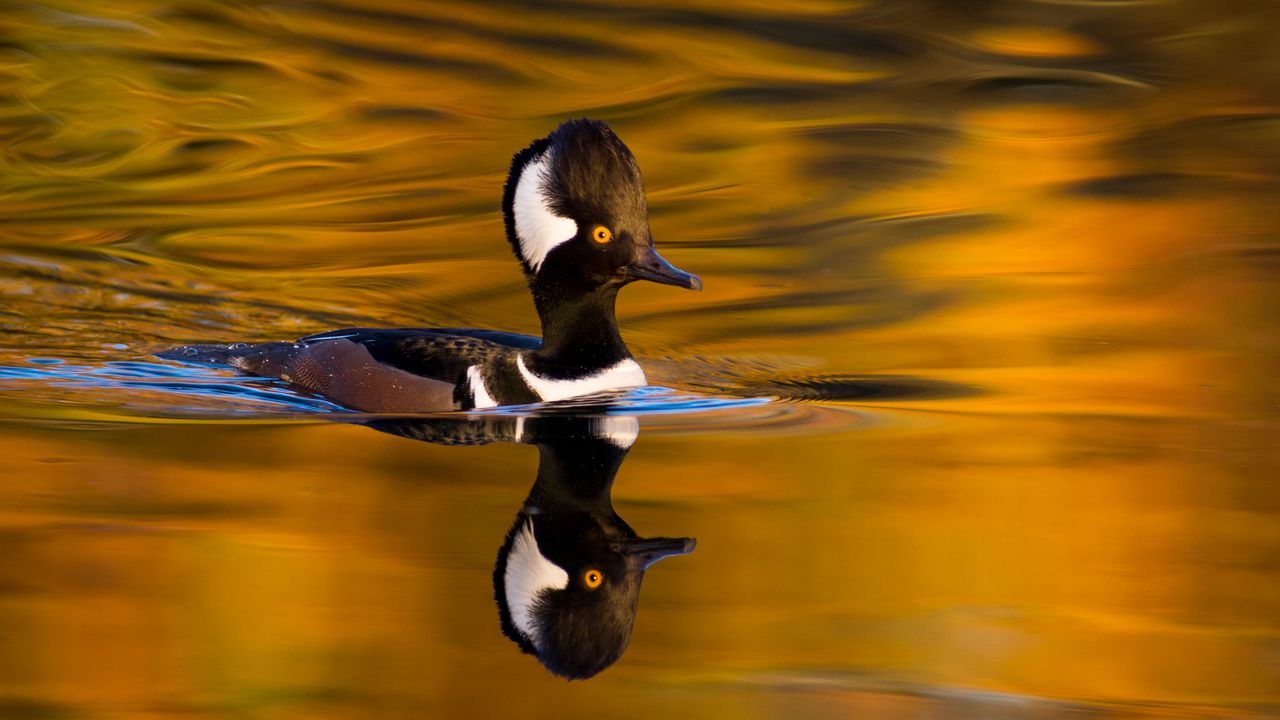
Male hooded merganser, Oregon
© Eric Vogt/TANDEM Stills + Motio
Fall's feathered headliner. Male hooded merganser, Oregon
Each fall, Oregon's quiet waterways become seasonal waypoints for hooded mergansers—small diving ducks native to North America. They are agile divers, plunging beneath the surface to catch fish and other prey. Males, known as drakes, stand out with their fan-shaped white crests, dark heads, and chestnut-brown sides, while females, called hens, are brownish gray with smaller crests. Oregon's lakes and wetlands provide sheltered feeding grounds as these birds migrate or winter across the continent.
Among the six living merganser species, hooded mergansers are the second smallest. They are known for their striking courtship displays, where males raise their crests dramatically to attract mates, creating unmistakable shapes on still water. They nest in tree cavities near wetlands, and soon after hatching, ducklings leap to the ground to follow their mother to water. Classified as Least Concern on the International Union for Conservation of Nature's Red List, their populations remain stable across their range. First described in 1758, their genus name, 'Lophodytes,' means 'crest diver' in Greek—a nod to both their plumage and underwater hunting skill.
Related Images
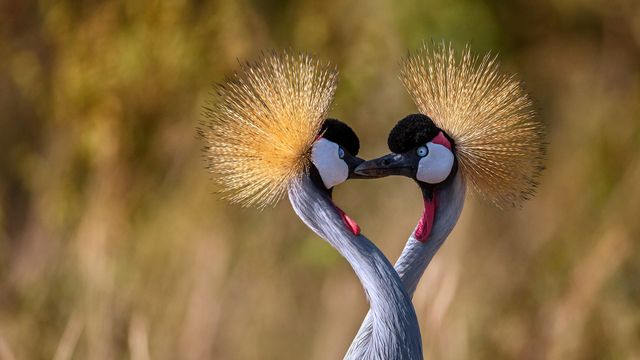 Grey crowned cranes forming a heart
 A nesting colony of king penguins in South Georgia, Antarctica
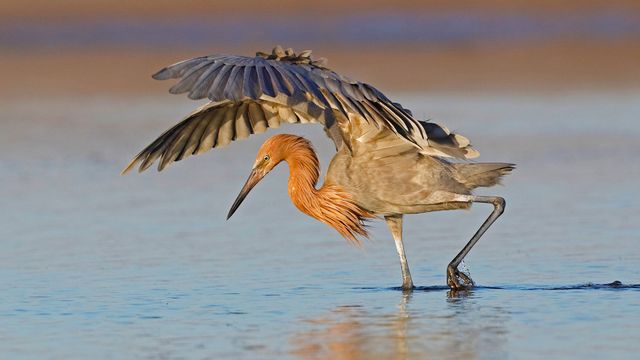 A reddish egret hunts in Fort De Soto Park, Florida
 Trumpeter swans at Kelly Warm Springs, near Kelly, Wyoming
 Male Atlantic puffin gives his mate nesting material, Skomer Island, Wales
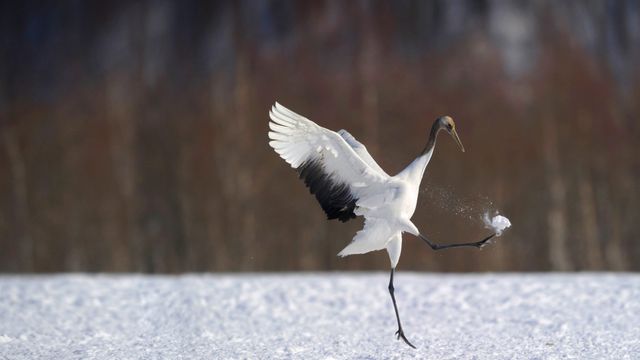 Japanese crane in Hokkaido, Japan
 Southern rockhopper penguins on the Falkland Islands
 A group of curious emperor penguins in Antarctica
Bing Today Images