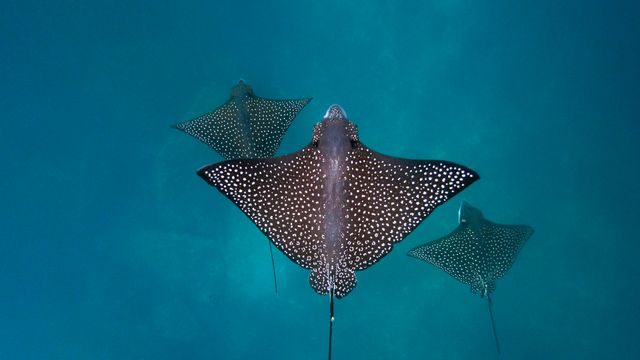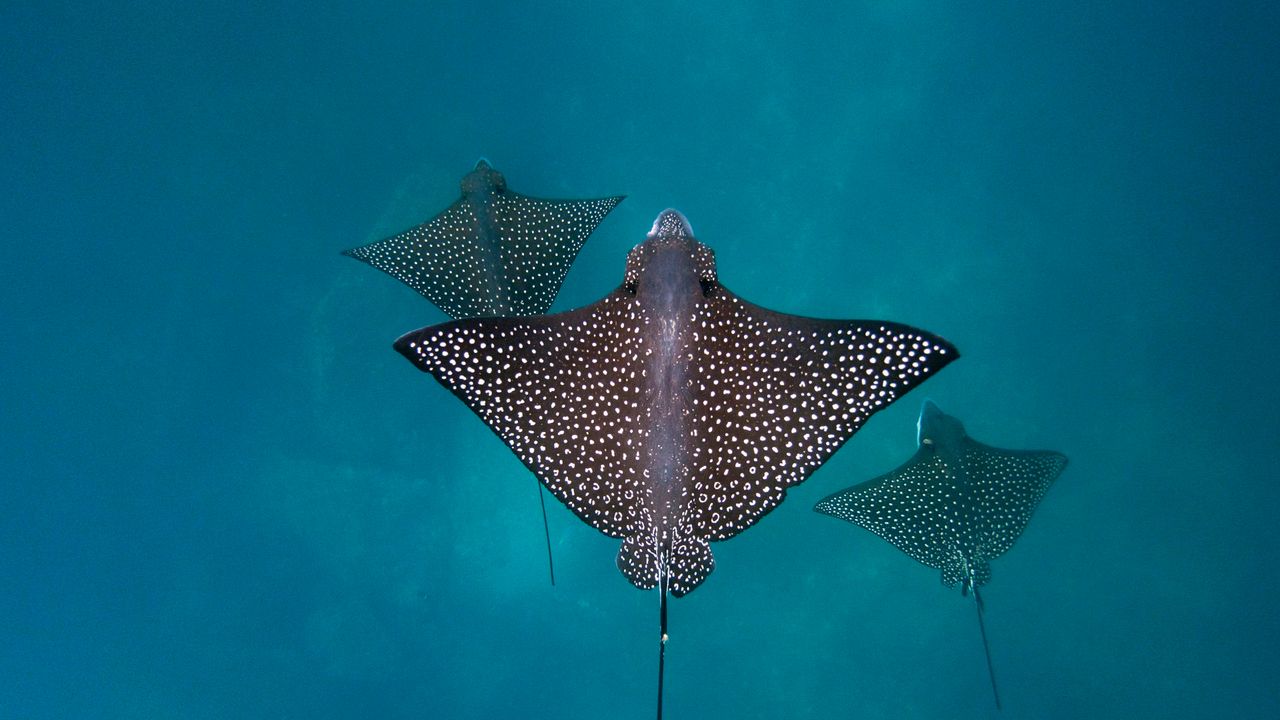
Spotted eagle rays, San Cristóbal Island, Galápagos Islands, Ecuador
© Tui De Roy/Minden Picture
Winging it underwater. Spotted eagle rays
It's a bird, it's a plane, it's … a fish! Gliding through the ocean with flapping fins and polka-dot flair, the spotted eagle ray refuses to blend in. It doesn't crawl along the seabed like its stingray cousins—it flies underwater. The species gets its name from—you guessed it—its protruding snout, which resembles an eagle's beak, and its distinctive spotted back, which is unique to each individual, much like fingerprints. Their wing-like pectoral fins can span up to 3 metres. Near the base of the long tail are venomous spines, in case a predator gets too close. These rays aren't aggressive, but they're not defenceless either.
These creatures are often seen alone, but when they travel in groups, it's a show worth watching. Dozens can glide together in perfect sync, like the ones photographed near San Cristóbal Island in Ecuador. They are also known to leap out of the water, sometimes completely clearing the surface, proving you don't need feathers to fly. Despite their elegance, spotted eagle rays are currently listed as near threatened. Their populations are declining due to various threats, including bycatch and habitat degradation.
Related Images
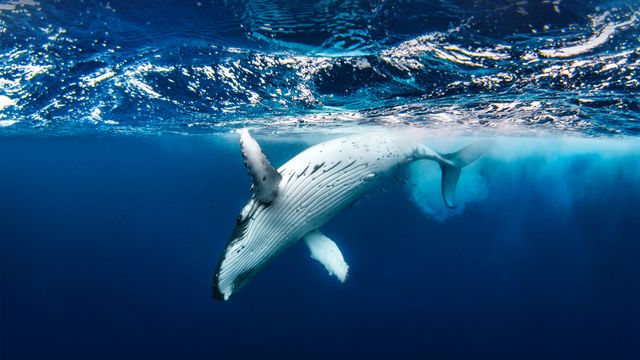 Humpback whale
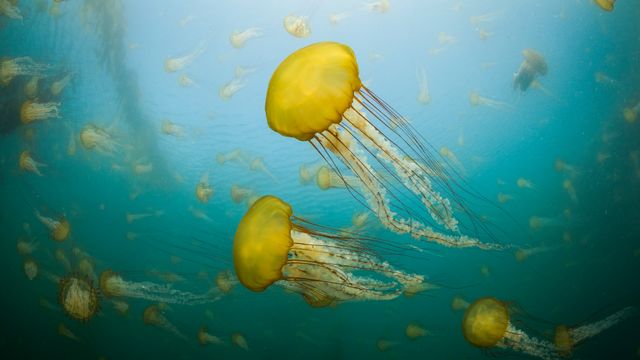 Pacific sea nettles off the coast of Carmel, California, USA
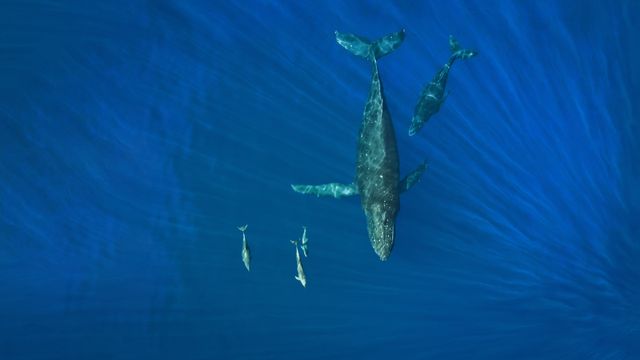 Humpback whales and dolphins, Hawaii, USA
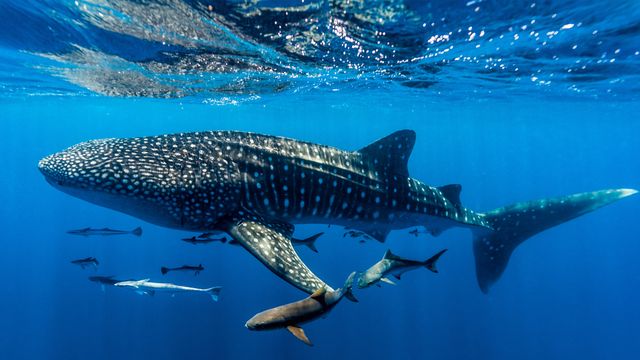 Whale shark, Ningaloo Reef, Western Australia
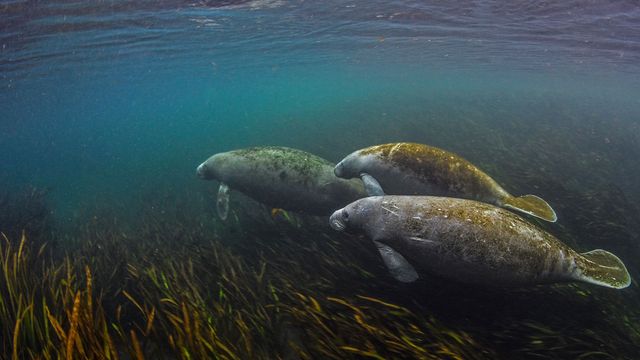 Manatees in the Ichetucknee River in Florida, USA
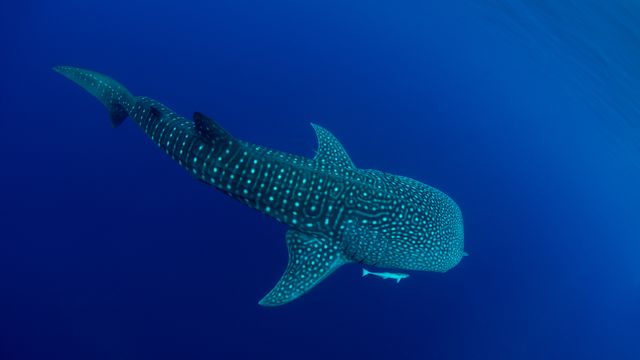 A whale shark in Cenderawasih Bay, West Papua, Indonesia
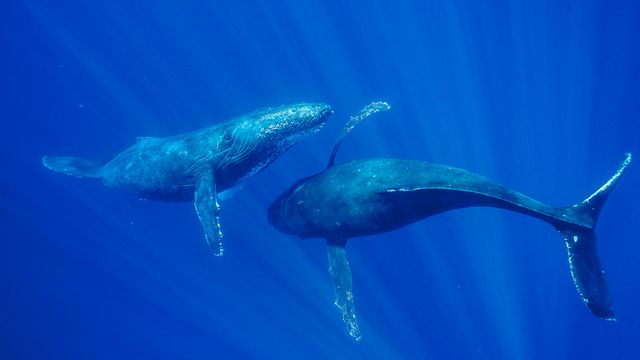 Humpback whales, Maui, Hawaii
 Golden jellyfish in Jellyfish Lake on the island of Eil Malk, Palau
Bing Today Images