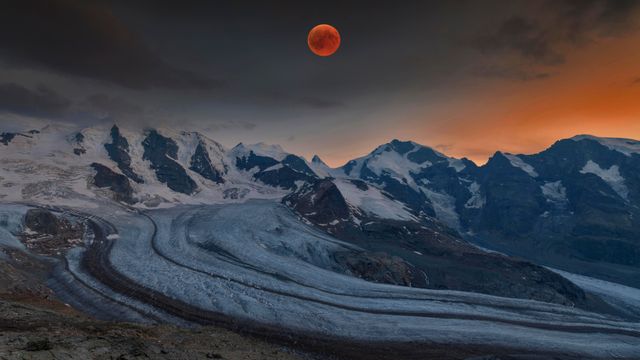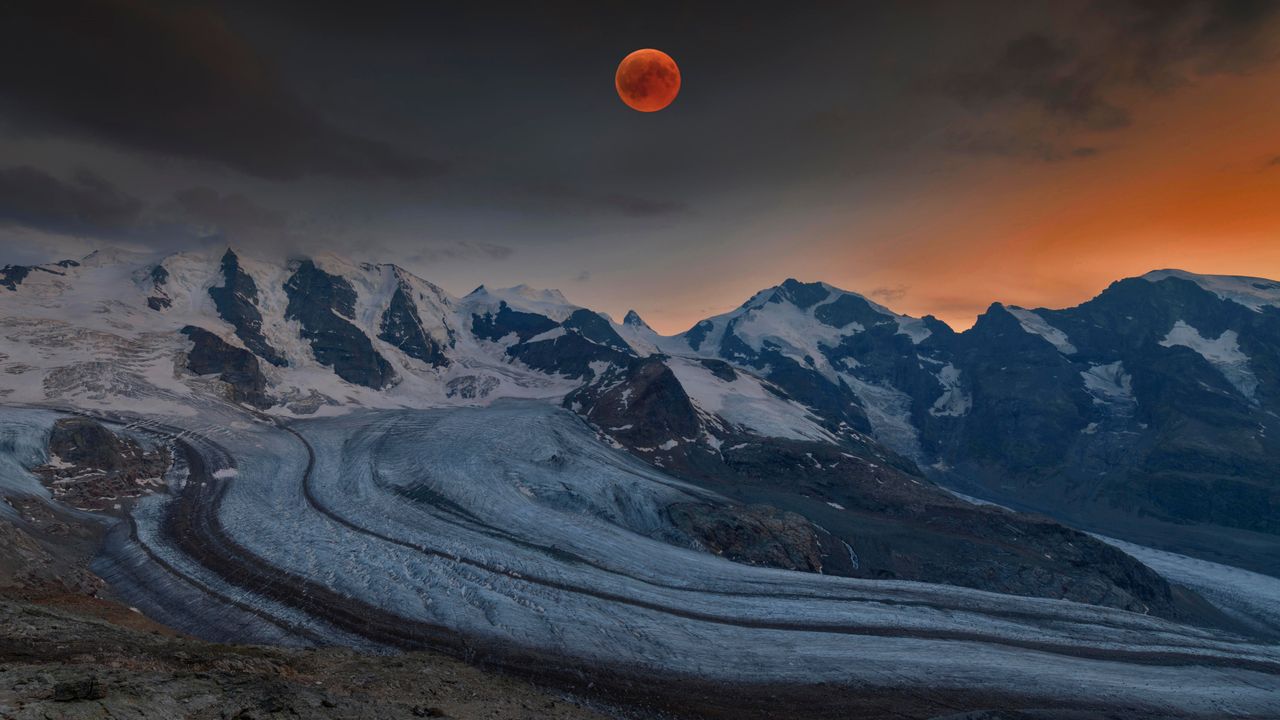
Blood moon, Bernina Range, Eastern Alps, Engadin, Switzerland
© Bernd Zoller/Shutterstoc
Total lunar eclipse
A total lunar eclipse is sometimes called a ‘blood moon’. The spooky nickname comes from the reddish colour of the Moon when Earth casts its shadow upon it. Featured here is a blood moon over the Swiss Alps. A total lunar eclipse occurs when the Earth and Moon align perfectly with the Sun, and the Moon falls directly behind Earth’s shadow. When Earth falls behind the Moon’s shadow, a solar eclipse occurs.
While total eclipses of the Sun get more attention, total lunar eclipses are also impressive. You can look directly at a total lunar eclipse without any worry of harming your eyes, and they're viewable by far more people than solar eclipses. That’s because a total lunar eclipse can last for hours, while solar eclipses last just a few minutes. In addition, lunar eclipses can be seen anywhere on the night-time side of the world, while total solar eclipses occur only within a narrow longitude on the planet.
Related Images
 Mount Rainier National Park in Washington state
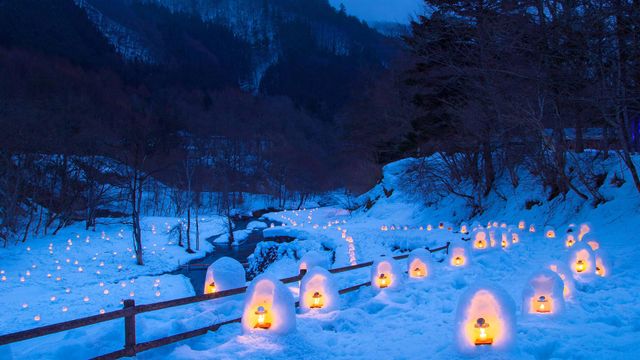 Yunishigawa Kamakura Festival in Tochigi Prefecture, Japan
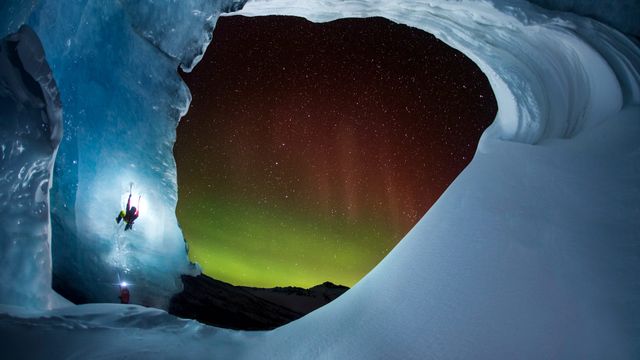 Climbing Athabasca Glacier in Jasper National Park, Alberta, Canada as the Aurora Borealis glows
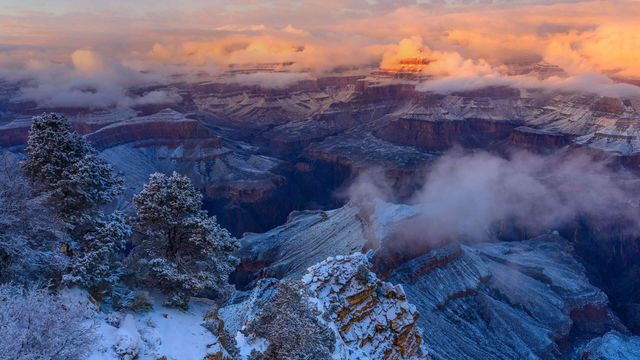 Winter at the Isis Temple in Grand Canyon National Park, Arizona
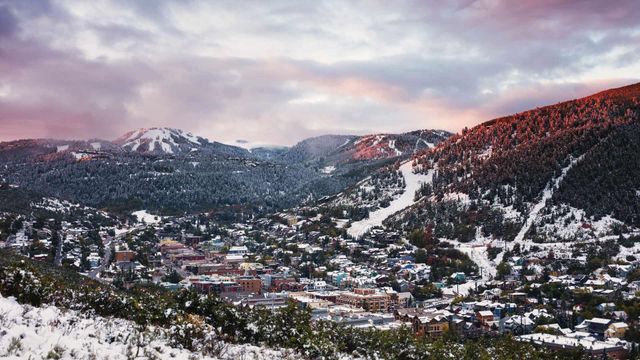 Park City, Utah, for the Sundance Film Festival, which begins today
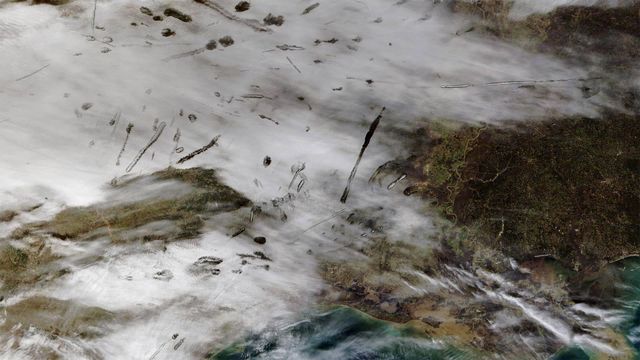 From NASA’s Terra satellite, an image of fallstreak holes in clouds over the southern United States
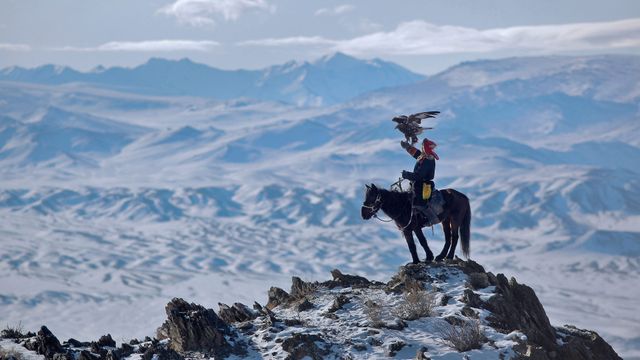 A rider hunts with an eagle in the Altai Mountains of Mongolia
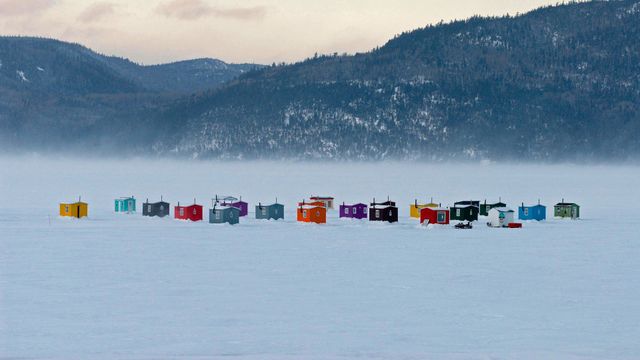 Ice-fishing village near L'Anse-Saint-Jean, Quebec, Canada
Bing Today Images