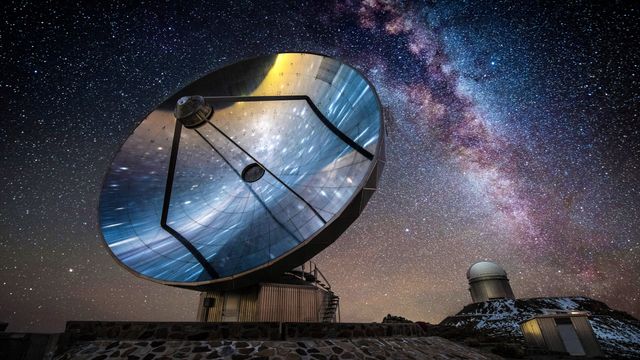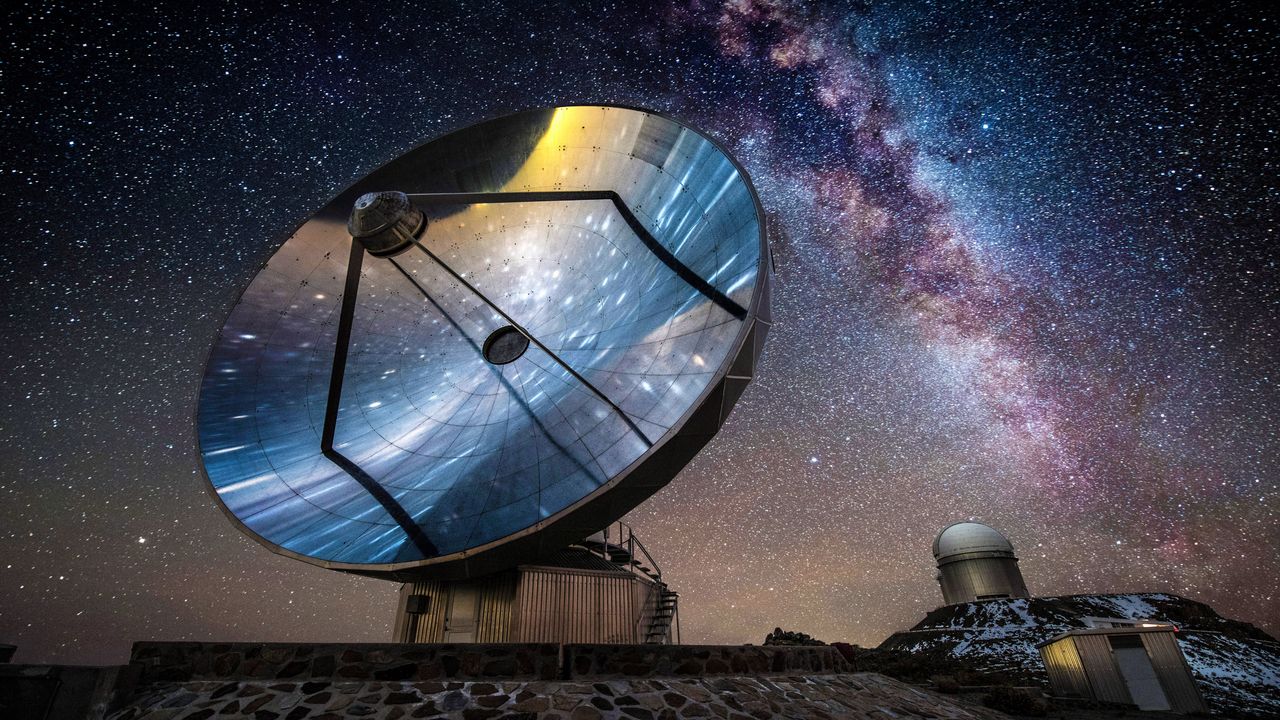
Swedish telescope at La Silla ESO Observatory, Chile
© Alberto Ghizzi Panizza/Getty Image
Eyes on the skies. Astronomy Day
In one of the darkest places on Earth there's a cluster of telescopes that examine the heavens each night, sending detailed information about the celestial bodies they observe to astronomers across the planet. Far from any population centers or light pollution, the Atacama Desert is the world's driest nonpolar desert. It's the perfect place for La Silla Observatory, one of the largest observatories in the Southern Hemisphere, and the first to be used by the European Southern Observatory (ESO), a research organization made up of astronomers from 16 European nations. The first ESO telescope at the La Silla site in Chile began operating in 1966.
And what better place to spend World Astronomy Day? The event was started in 1973 by Doug Berger, the president of the Astronomical Association of Northern California. His initial intent was to set up various telescopes in busy urban locations so that passersby could enjoy views of the heavens. Since then, the event has expanded and is now sponsored by several organizations associated with astronomy. The springtime Astronomy Day is mirrored by another in the fall between mid-September and mid-October.
Related Images
 Traffic circle and highway in Bangkok, Thailand
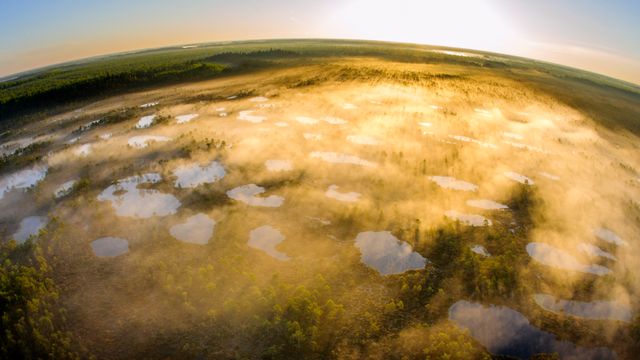 Alam-Pedja Nature Reserve in Tartu County, Estonia
Bing Today Images