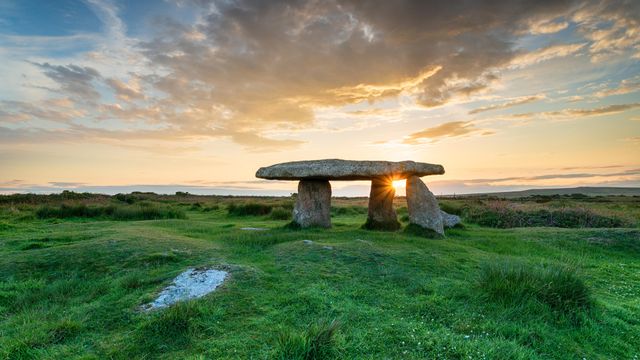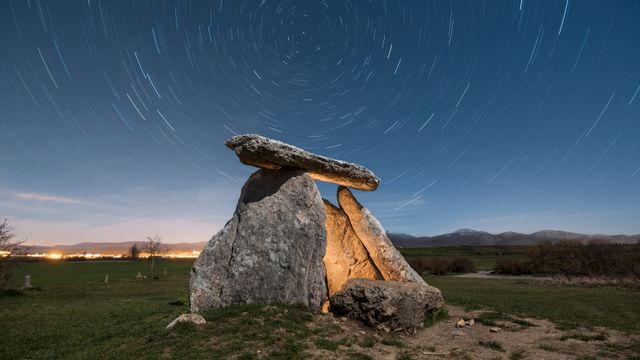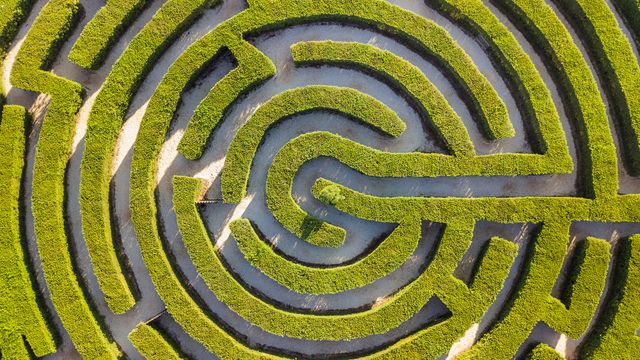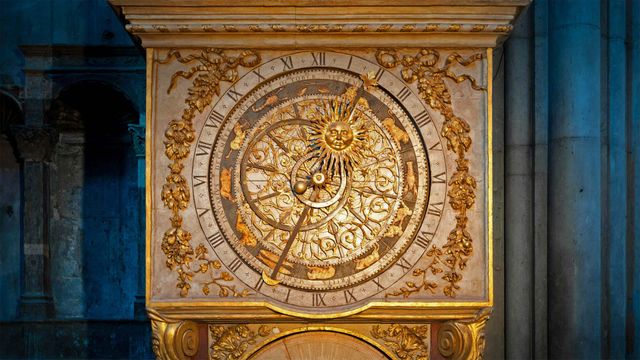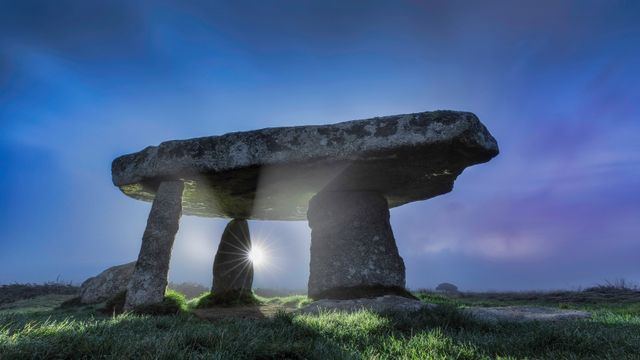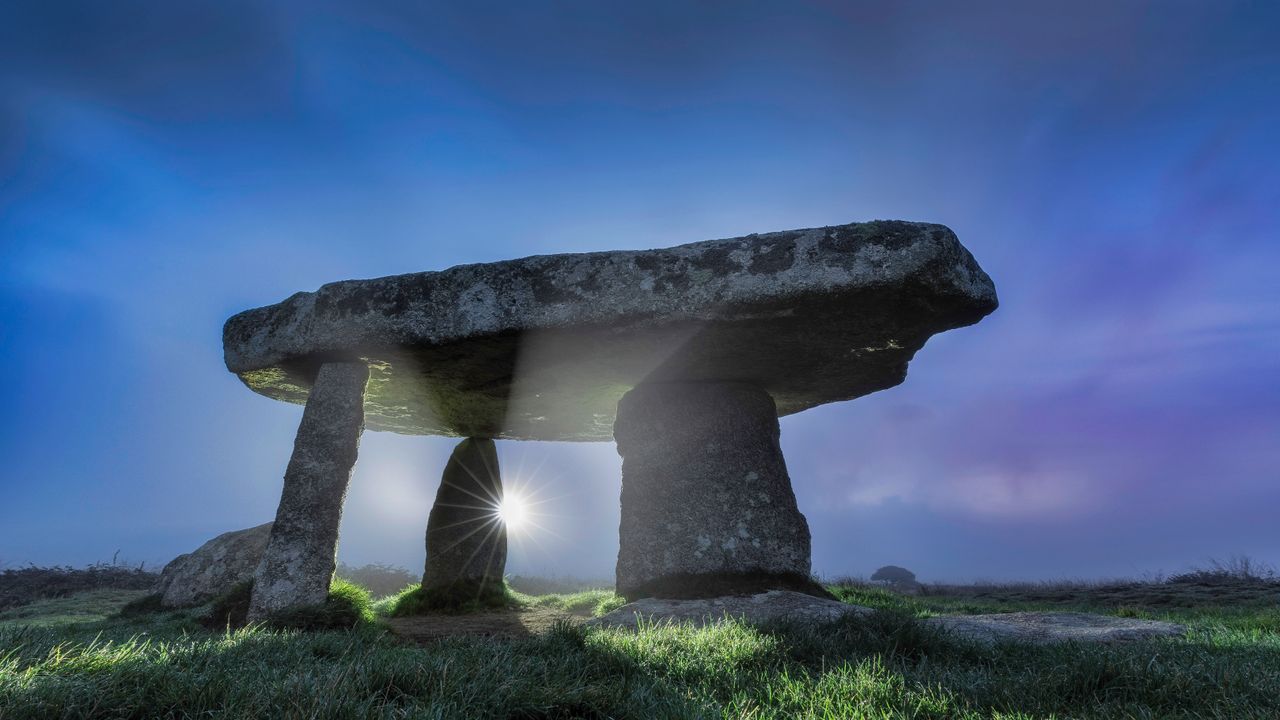
Lanyon Quoit burial chamber, Cornwall, England
© Guy Edwardes/Minden Picture
It’s just pi in the sky.... Pi Day
Did Neolithic humans build this structure to celebrate Pi Day? Not likely. Pi Day is a relatively recent phenomenon—invented by a physicist in 1988. While Pi Day is a young tradition, the number π (pi) itself has been a fascination since antiquity, when it was first calculated as the ratio of a circle's circumference to its diameter.
You probably know that March 14 was chosen for Pi Day since the date expressed numerically (in month/date format) matches the number’s first digits, 3.14. Aside from eating pie to celebrate, some people go to great lengths to memorize digits that go way beyond 3.141592…, which earns them bragging rights in some, um, circles. The world record is a staggering 70,000 digits after the decimal point–the remarkable feat was achieved by 21-year-old student Rajveer Meena in 2015.
Take a moment from your Pi Day celebration to appreciate the unintentional π symbol formed by this Neolithic burial chamber in Cornwall, England. As the morning sun warms Lanyon Quoit’s ancient stones, it’s impossible not to wonder who built it and how, since it predates metal tools and is older than Egypt’s pyramids. Theories abound, of course, but could π have been involved?
Related Images
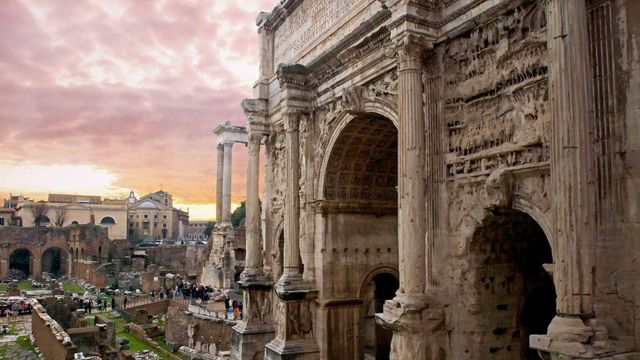 At the Arch of Septimius Severus in the Roman Forum for the ides of March
 At Casa Batlló for Saint Jordi’s Day in Barcelona, Spain
 Landmark Center clock tower and Winter Carnival Ice Palace in St. Paul, Minnesota
 An old farm in the Shetland Islands, Scotland
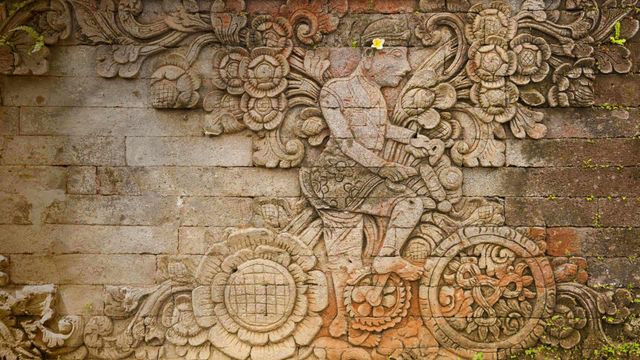 A carving of artist W.O.J. Nieuwenkamp in the Pura Meduwe Karang temple in Bali, Indonesia
 Sandcastle on Malvarrosa Beach in Valencia, Spain
 For Waitangi Day, the Pancake Rocks on New Zealand’s South Island
 Meditation domes at the Beatles Ashram in Rishikesh, India
Bing Today Images