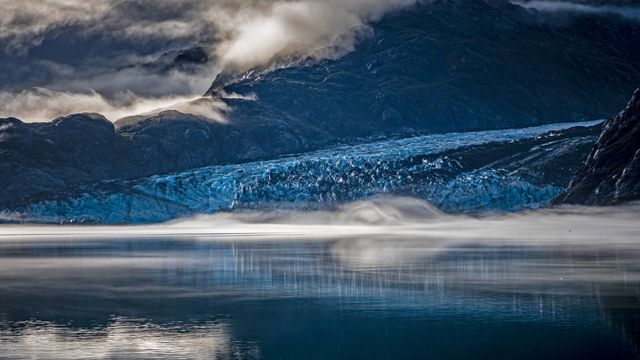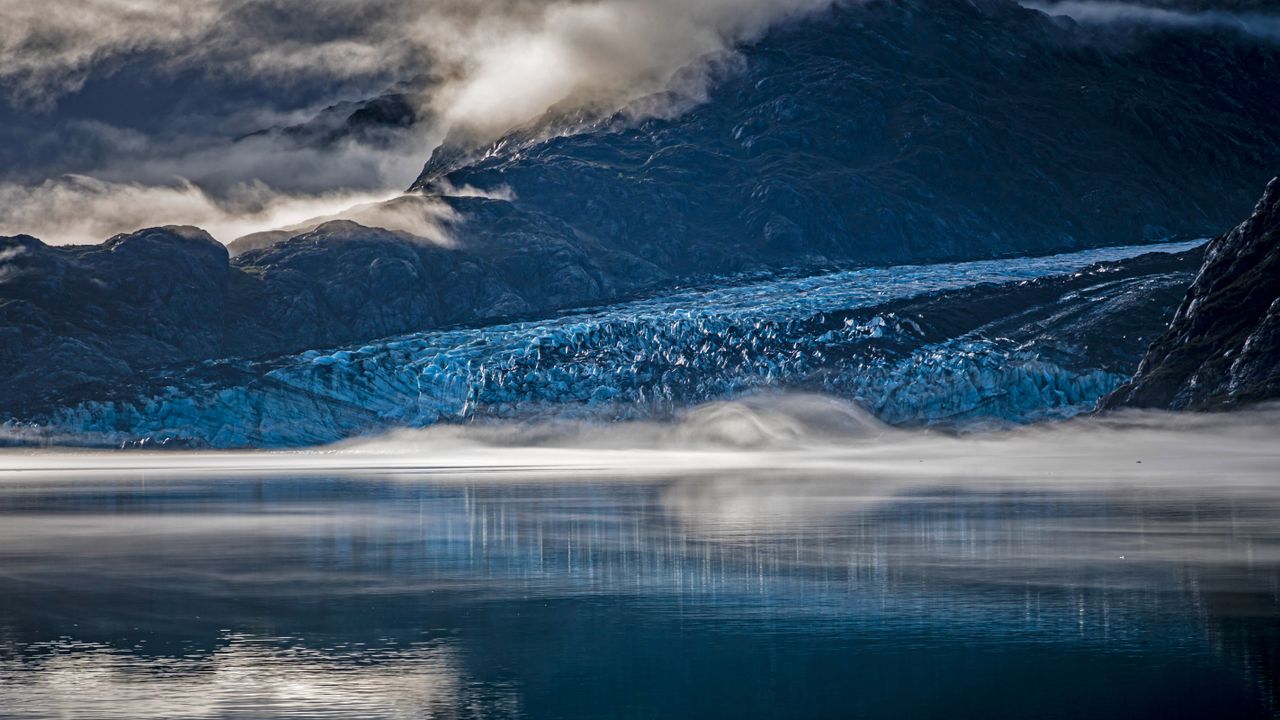
Lamplugh Glacier in Glacier Bay National Park, Alaska
© Andrew Peacock/Getty Image
Where ancient ice meets the sea. Glacier Bay National Park and Preserve
Think of this special spot as the place where two different Alaskas meet – its vast icy north and its verdant maritime south. Glacier Bay is named for this area’s dominant feature, the rivers of ice that carve the landscape and periodically calve icebergs into the sea. On February 26, 1925, US President Calvin Coolidge declared much of the land around the bay a national monument. But the protected area was greatly expanded in 1980, when a 3.3-million-acre expanse of glaciers, fjords, rainforest, coastline, and mountain peaks was named a national park and preserve.
Pictured here is Lamplugh Glacier, one of the relatively few tidewater glaciers in the park; the vast majority are found inland. Lamplugh is known for its intense blue colour – ice and water absorb the red wavelength of white light and transmit blue light, which is what we end up seeing. The thicker and purer the ice, the bluer it appears.
Related Images
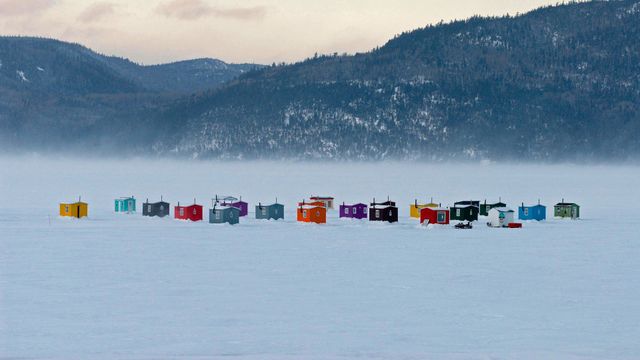 Ice-fishing village near L'Anse-Saint-Jean, Quebec, Canada
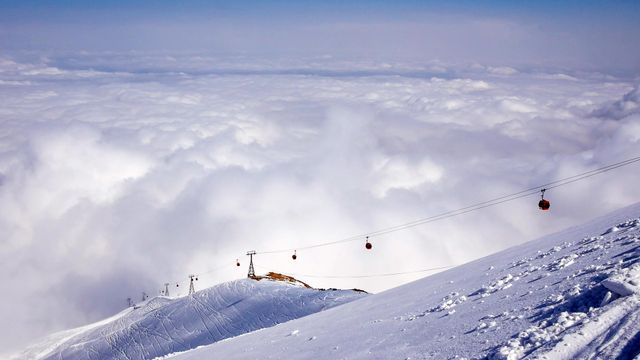 The Gulmarg cable cars in the Himalayas
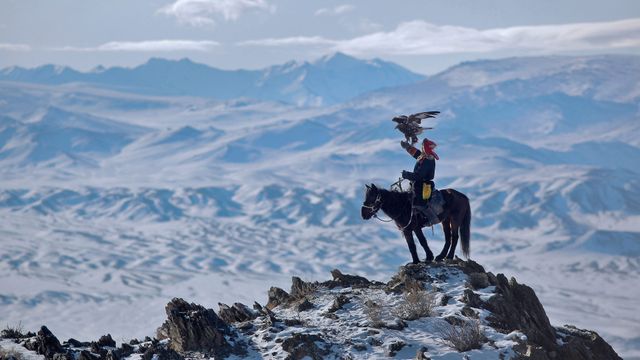 A rider hunts with an eagle in the Altai Mountains of Mongolia
 On Pie Day, an apple tree in winter
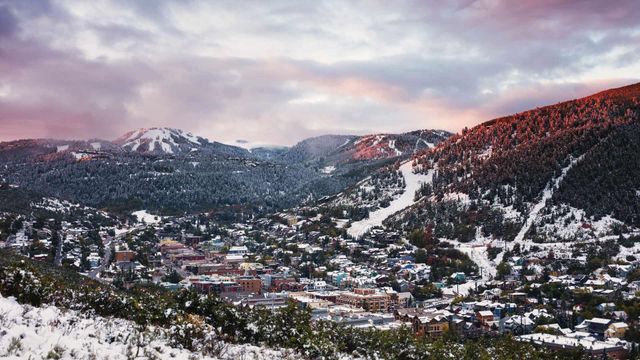 Park City, Utah, for the Sundance Film Festival, which begins today
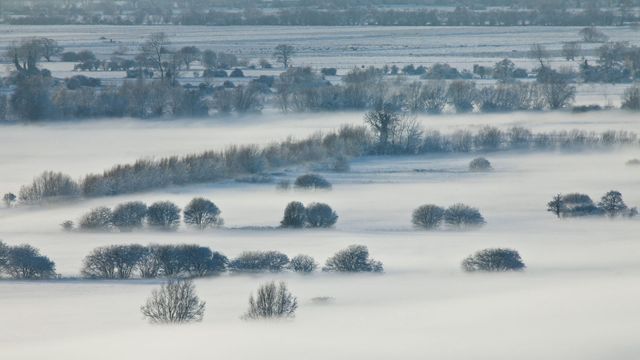 In Somerset, England, for Old Twelvey Night
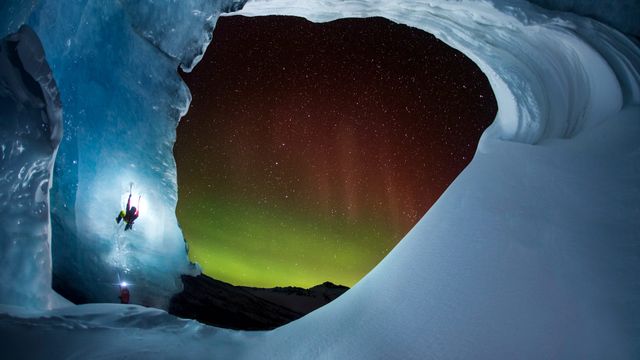 Climbing Athabasca Glacier in Jasper National Park, Alberta, Canada as the Aurora Borealis glows
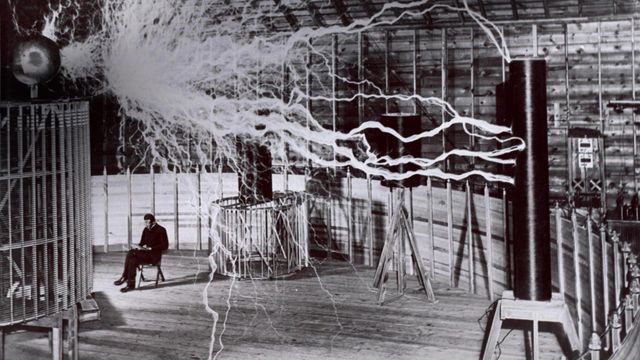 For Science Fiction Day, inventor Nikola Tesla and his ‘magnifying transmitter’
Bing Today Images