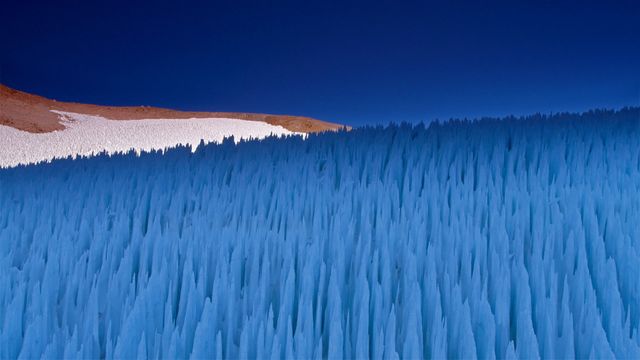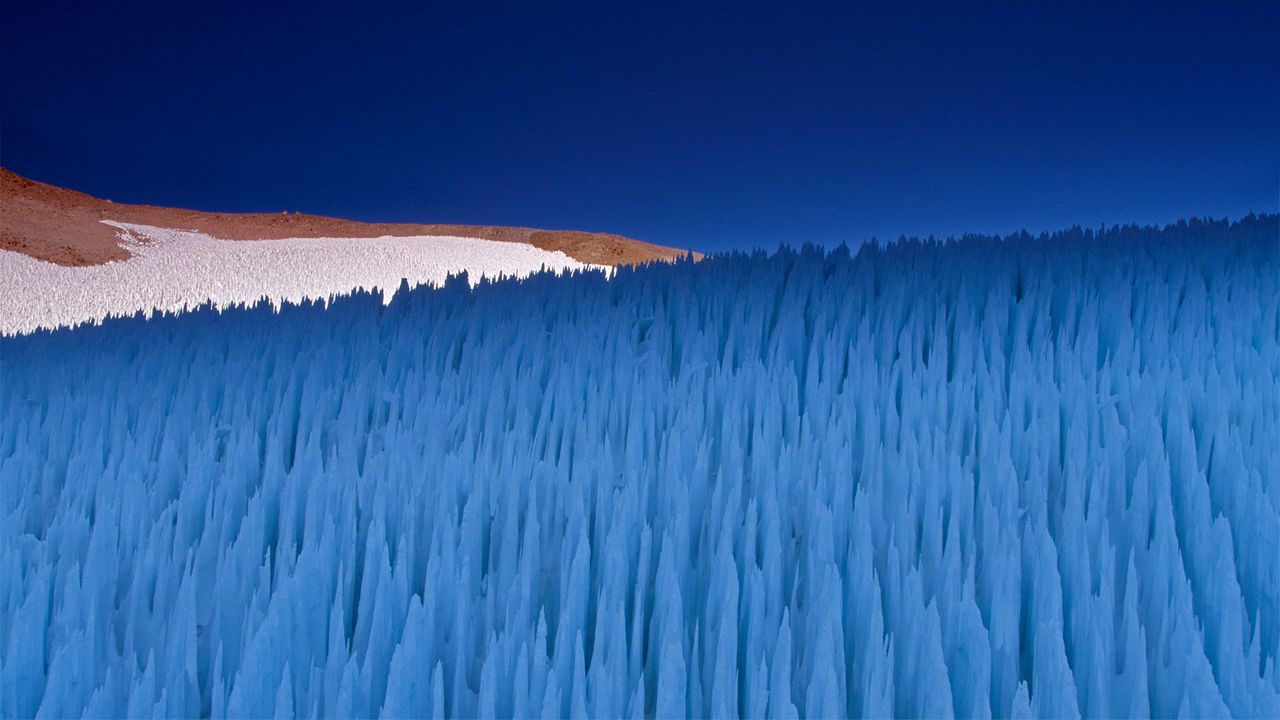
Nieve penitente ice formations seen on Agua Negra Pass in the Coquimbo Region of the Andes, Chile
© Art Wolfe/Danita Delimon
A throng of ice and spires
If these frozen formations were named by more literal minds, we might know them as simply 'reverse icicles'. But the Andes, including this mountain pass rising above Chile's Atacama Desert, were mapped by poetically inclined Spanish explorers. They likened formations like these to a kneeling congregation of penitent parishioners: so the packed-snow pinnacles became known as 'penitentes’.
Maybe the most dramatic penitentes appear in dry sections of the Andes, but they can form anywhere the Sun is strong enough to vaporise snow faster than it can melt into water. Since snow isn't a perfectly even surface, some patches of the snowpack turn to vapour faster than others, creating pits that further reflect sunlight upon themselves. This quickens vaporisation within the pits, deepening them, often all the way down to the bare earth. The snow in between is left standing (or kneeling) as penitentes.
Related Images
 A rider hunts with an eagle in the Altai Mountains of Mongolia
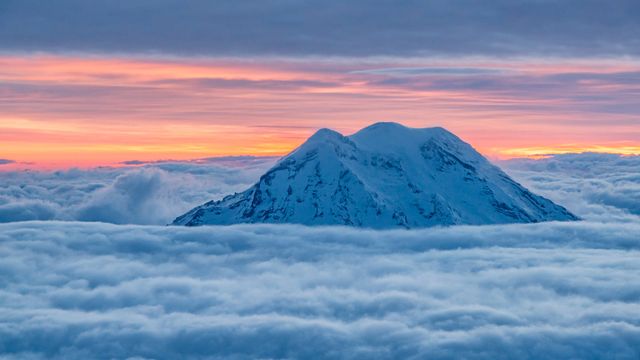 Mount Rainier National Park in Washington state, USA
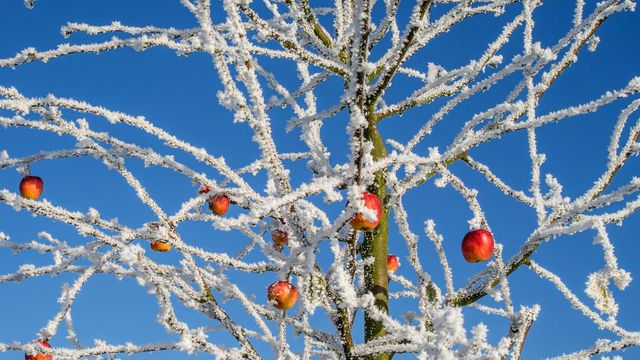 On Pie Day, an apple tree in winter
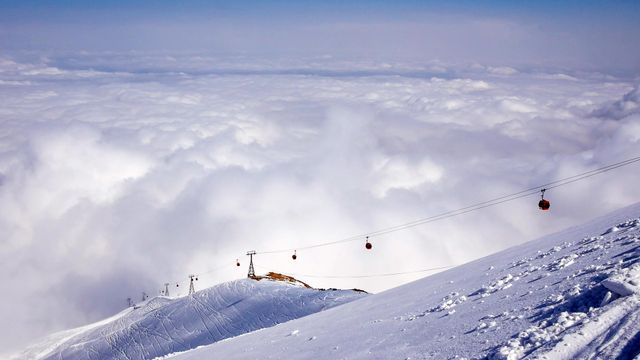 The Gulmarg cable cars in the Himalayas
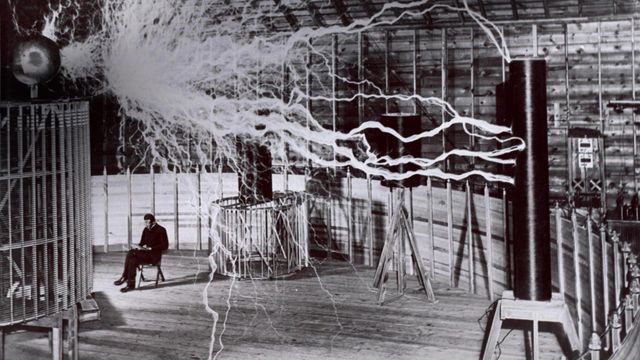 For Science Fiction Day, inventor Nikola Tesla and his ‘magnifying transmitter’
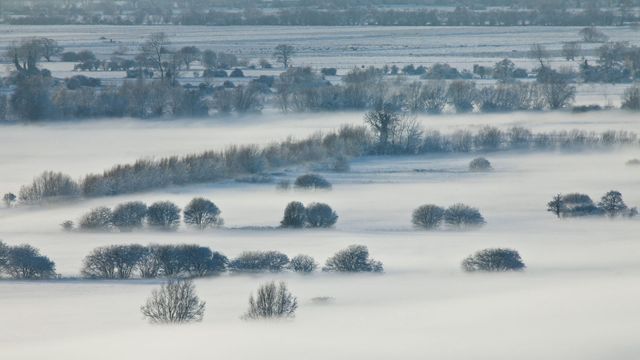 In Somerset, England, for Old Twelvey Night
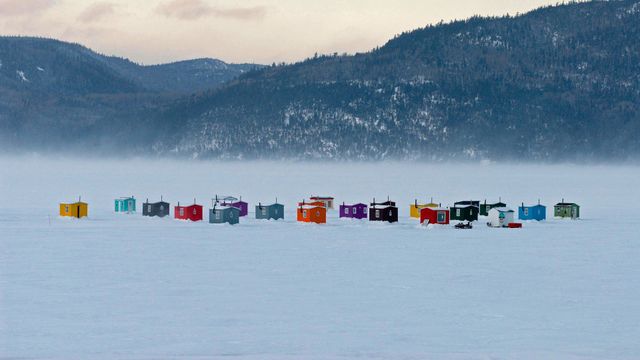 Ice-fishing village near L'Anse-Saint-Jean, Quebec, Canada
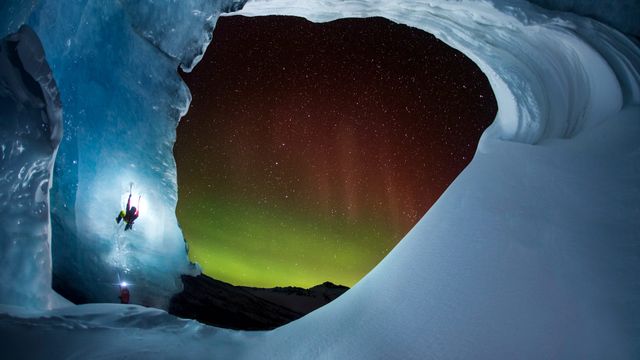 Climbing Athabasca Glacier in Jasper National Park, Alberta, Canada as the Aurora Borealis glows
Bing Today Images