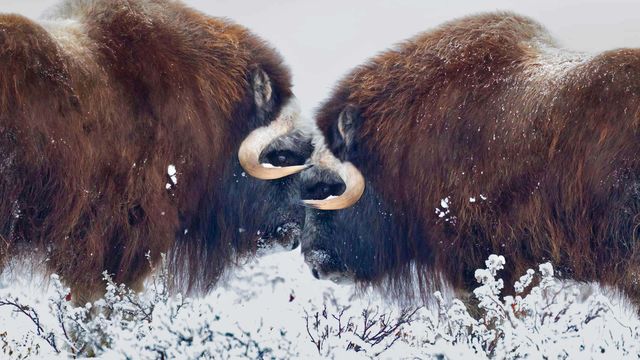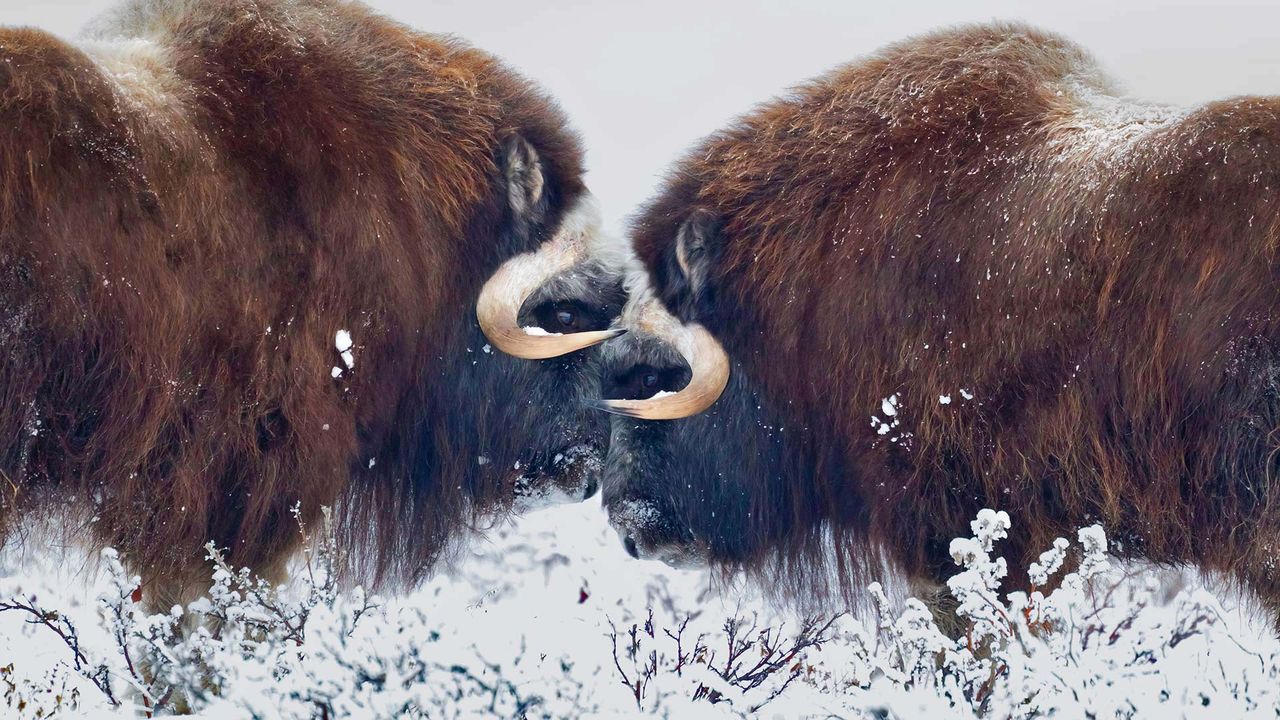
Male muskoxen near Prudhoe Bay in Alaska
© Oliver Smart/Alam
Going head to head with winter
Muskoxen are built to chill. These animals can endure, even thrive, in some of the harshest conditions on Earth—the Arctic winter. Their long, wiry outer coat covers a soft and thick inner layer, called qiviut, that keeps them toasty even as temperatures plummet. When winter ends, the muskoxen shed this undercoat, which is collected and spun into yarn that's warmer than sheep's wool and softer than cashmere—pricier, too.
Muskoxen, named for the strong odour the males emit during the rutting (mating) season, have roamed the tundra eating roots, mosses, and lichen for thousands of years. In the 1920s, they were hunted almost to extinction, and were totally wiped out in Alaska, USA (where today's image was photographed). But thanks to a reintroduction program, today there are roughly 5,000 muskoxen in Alaska, out of an estimated 125,000 animals worldwide.
Related Images
 Meerkats in the Kalahari Desert in Botswana
 A Kermode bear cub huddling with its sibling in Canada's Great Bear Rainforest, British Columbia, Canada
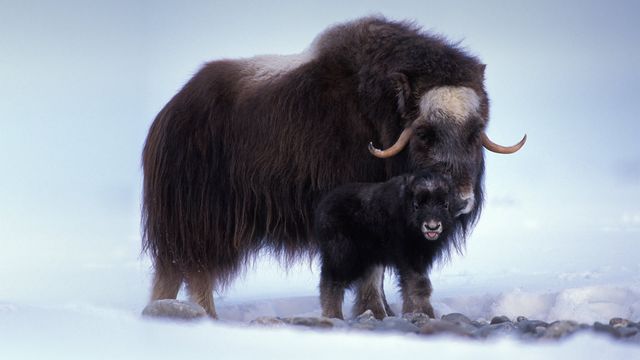 Muskox with newborn in the central Arctic coastal plain of Alaska
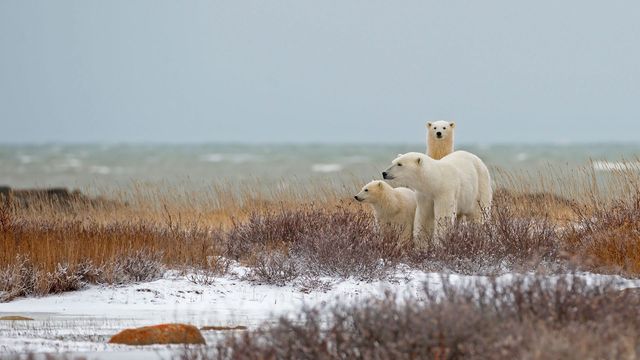 A polar bear family near the Hudson Bay in Churchill, Manitoba, Canada
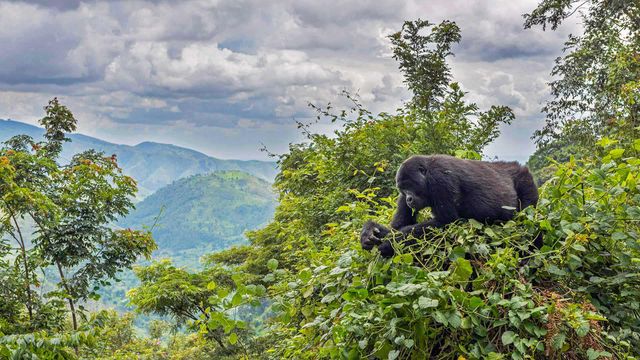 A mountain gorilla eating in a tree in the Bwindi Impenetrable National Park, Uganda
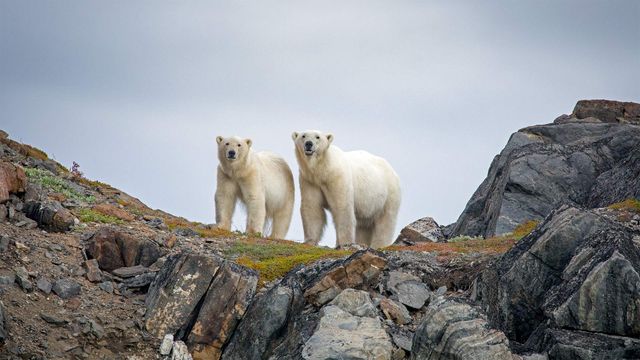 Polar bears in Torngat Mountains National Park, Canada
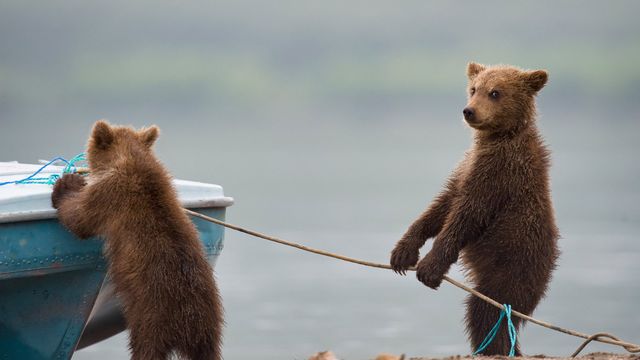 Bear cubs playing by a lake
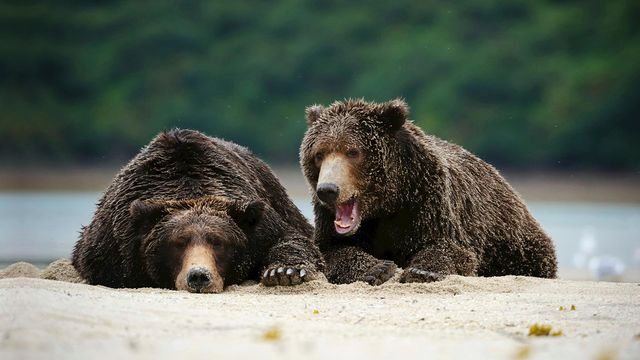 Brown bears in Katmai National Park, Alaska
Bing Today Images