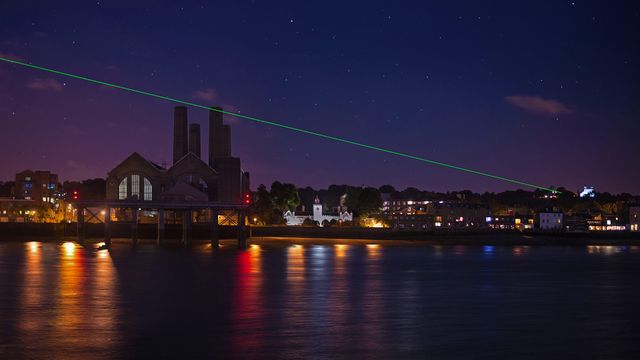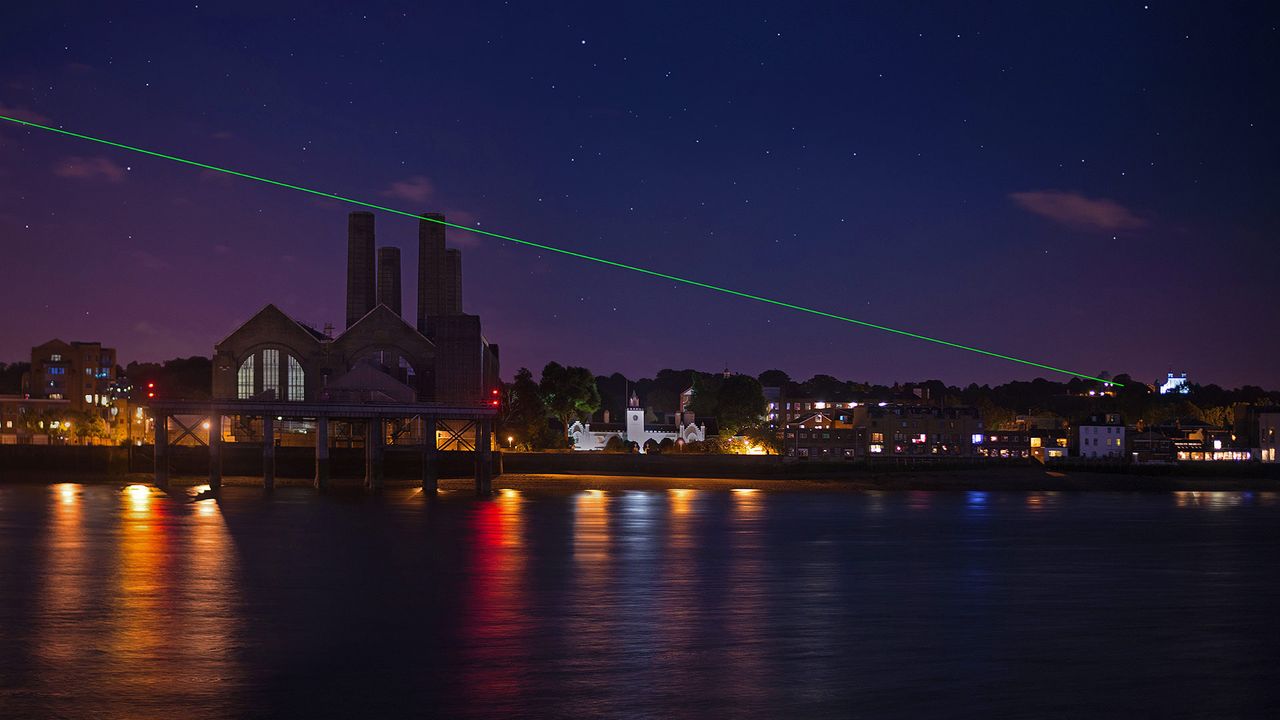
'0 Degrees,' laser art by Peter Fink and Anne Bean, in Greenwich, England
© Norah Saudan/Gett
East meets west at the prime meridian. ‘Hello’ from zero degrees longitude
This laser projected from the Royal Observatory in Greenwich, England, marks the prime meridian, dividing Earth’s Eastern and Western hemispheres and helping travellers to chart their courses by establishing a universally adopted 0 degrees longitude. The meridian itself is essentially an imaginary line, arbitrarily placed. By the early 19th century, most maritime countries had established their own prime meridians to aid in navigation. But on this date in 1884, delegates from 25 nations (of which Australia was not included) met at a conference in Washington, DC where they established Greenwich as the international standard for mapping and time keeping. The decision made sense, as the Greenwich meridian was already widely used. But there was one hold out: France abstained from the vote and used its own prime meridian for several decades before eventually joining other countries in recognising the Greenwich meridian.
Related Images
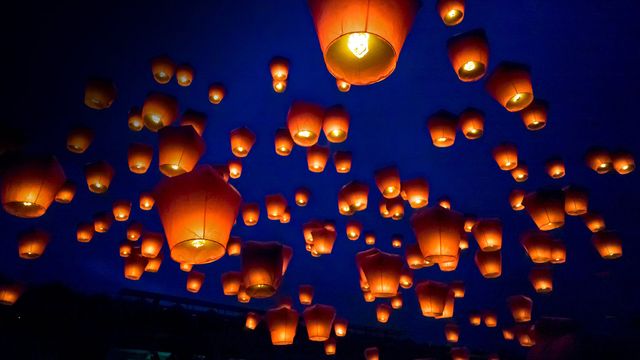 Pingxi Sky Lantern Festival in Taipei, Taiwan
 Yunishigawa Kamakura Festival in Tochigi Prefecture, Japan
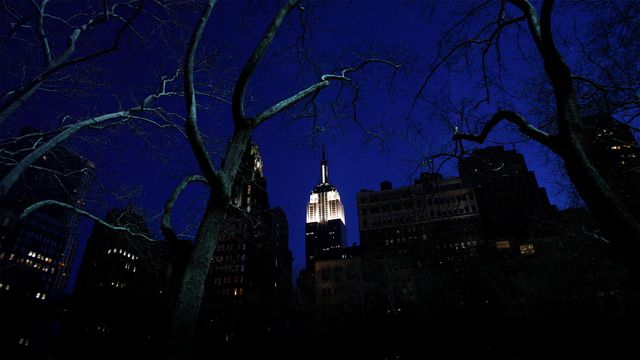 New York City’s Empire State Building is seen lit up before Earth Hour in 2011
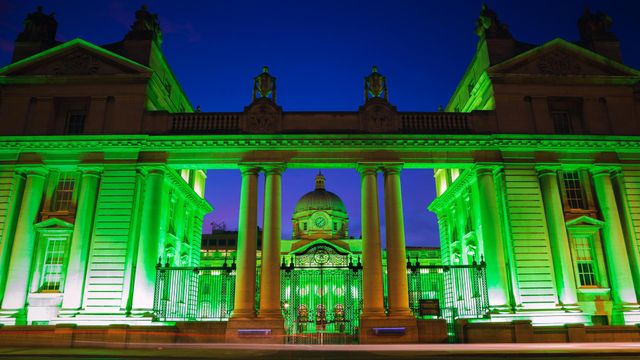 Department of the Taoiseach lit up for the St Patrick's Festival in Dublin, Ireland
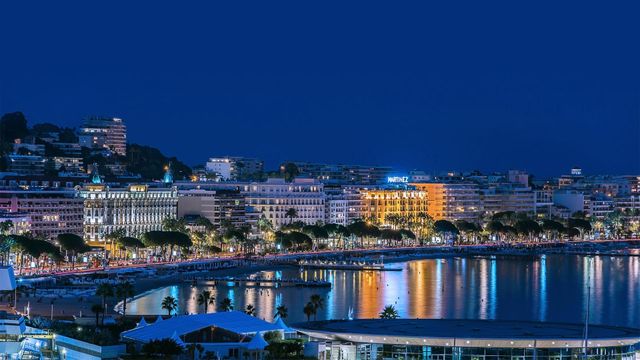 Cannes, France, where the annual film festival begins today
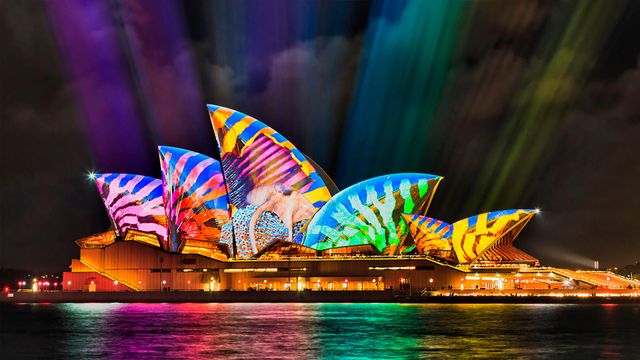 Sydney Opera House light beam projections during Vivid 2017
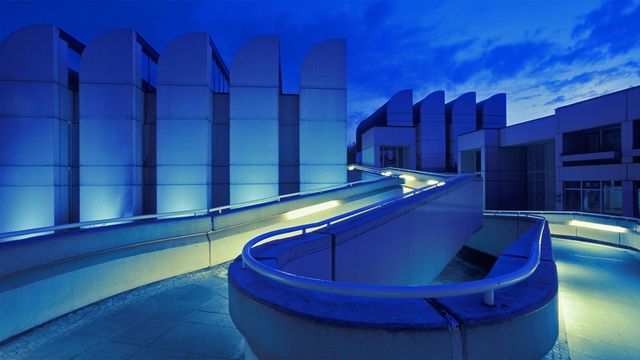 Bauhaus Archive Museum of Design in Berlin, Germany
 Milky way over the Bisti/De-Na-Zin Wilderness in New Mexico
Bing Today Images